Saudi Arabia travel guide content has exploded in relevance over the last few years, and for good reason. The Kingdom has opened its doors to international tourism in a big way, rolled out eVisas, upgraded infrastructure, and turned once “off-limits” places into bucket-list destinations.
Here’s the kicker: if you’re flying from the U.S., your whole experience starts with how you get there. That’s where Delta nonstop flights to Riyadh 2026 become a powerful anchor for your itinerary, giving you a direct gateway into the heart of the country.
Use this guide as your playbook to plan smart, travel confidently, and actually enjoy your time on the ground instead of fighting logistics.
Saudi Arabia at a glance: why it’s suddenly on everyone’s radar
Saudi Arabia isn’t just deserts and oil fields anymore.
The country is actively positioning itself as a major tourism and business hub, with:
- World-class heritage sites like AlUla and historic Diriyah
- Religious centers in Makkah and Madinah
- Futuristic mega-projects like NEOM and the Red Sea Project
- Upgraded airports, highways, and hospitality across key cities
In my experience, travelers who enjoy Saudi Arabia the most are the ones who:
- Arrive with realistic expectations and a flexible mindset
- Understand the cultural and legal framework ahead of time
- Combine a main “hub” city like Riyadh or Jeddah with at least one heritage or coastal destination
Think of Saudi as a country where ancient history, rapid modern development, and deeply rooted traditions sit side by side. That’s the appeal.
Best time to visit Saudi Arabia
Saudi Arabia is huge, and the weather varies, but there’s a general pattern you can trust.
Cooler, high-comfort months
- November to March – The prime months for most travelers.
- Mild to pleasantly warm in Riyadh and Jeddah, cooler in the north and desert regions.
- Best for outdoor sightseeing, heritage sites, and city exploration.
Shoulder seasons
- April–May and October – Warm to hot, but still manageable with good planning.
- Good if you want fewer crowds and possibly lower prices, especially outside key holiday periods.
Hot season
- June–September – Heat is intense, especially inland.
- You can still visit, but you’ll need to plan around the hottest hours, stick to air-conditioned spaces, and focus on coastal areas where possible.
Always check upcoming Ramadan and Hajj dates: during these periods, travel patterns, availability, and pricing can shift significantly, and religious travelers will take priority in certain locations.
Getting there: flights and entry basics
Flying into Saudi Arabia
For U.S. travelers, the most straightforward strategy is:
- Use a major hub like Riyadh (RUH) or Jeddah (JED) as your entry point.
- Connect domestically to other cities from there.
Nonstop options matter. That’s why Delta nonstop flights to Riyadh 2026 are such a big deal if you’re coming from the U.S.:
- You skip extra layovers in Europe or the Gulf.
- Your total travel time shrinks.
- You get a clean, direct path into the capital where you can then connect almost anywhere in the country.
Visa and entry requirements
Saudi Arabia has made this part easier than it used to be, especially for tourists.
Key points:
- Tourist eVisa: Many nationalities can apply online for a tourist eVisa, typically allowing multiple entries for a defined period.
- Business and work visas: If you’re traveling for business, you may need sponsor-based visas or specific documentation.
- Religious travel: Pilgrimage travel (Hajj and Umrah) has distinct rules; always verify the latest official guidance.
Always confirm:
- Eligibility
- Required documentation
- Allowed activities and duration
Use official Saudi government channels and reputable travel advisory sites for the most current rules; policies can and do change.
Top destinations in Saudi Arabia you shouldn’t miss
Saudi Arabia is not a “one city and done” country. The best trips stitch together multiple regions.
Riyadh: the capital and modern core
Riyadh is your likely entry point if you’re using Delta nonstop flights to Riyadh 2026, and it’s much more than a layover city.
Highlights:
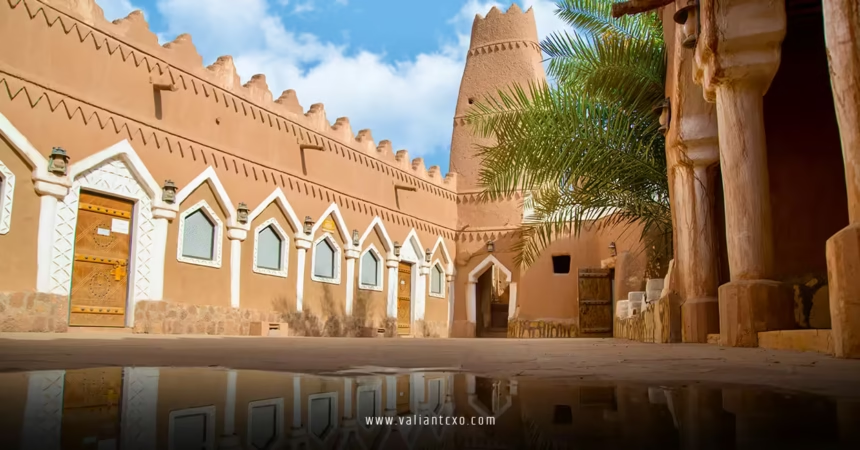
- Diriyah – Historic birthplace of the Saudi state, being developed into a major cultural and lifestyle destination.
- National Museum & Murabba – A strong intro to the country’s history and identity.
- Kingdom Centre & Boulevard areas – Modern malls, dining, and nightlife-style experiences within the local framework.
Riyadh gives you a look at Saudi’s business heart and rapid development. It’s a great base for 2–3 days at the start or end of your trip.
Jeddah: gateway to the Red Sea and Makkah
Jeddah blends history, commerce, and coastal life.
Don’t miss:
- Al-Balad (Historic Jeddah) – UNESCO-listed old town with traditional architecture and alleyways.
- Corniche – Modern seaside promenade, restaurants, and public art.
- Proximity to Makkah (for religious travel, with appropriate permissions and arrangements).
If you’re adding Red Sea beaches or planning religious travel, Jeddah belongs on your itinerary.
AlUla: open-air museum of rock formations and heritage
AlUla is the sort of place that makes people say, “I had no idea Saudi looked like this.”
Key sights:
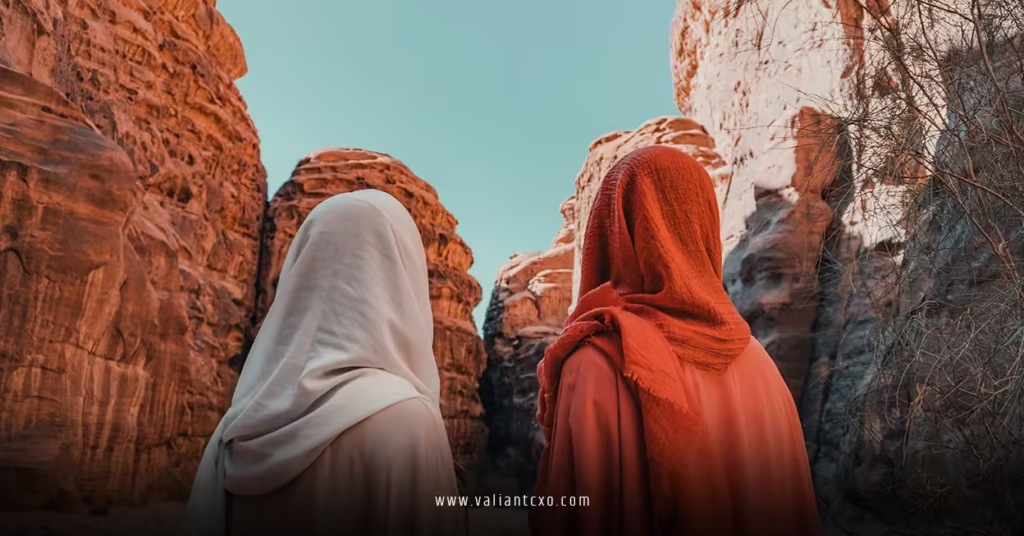
- Hegra (Madain Salih) – UNESCO World Heritage site, often compared with Petra for its carved rock tombs.
- Striking desert landscapes, rock formations, and stargazing opportunities.
- High-end resorts and eco-focused experiences.
Build at least 2–3 days into your plan here if you value landscape, history, and photography.
The Red Sea coast and new mega-projects
Saudi’s Red Sea coast is being developed as a major tourism hotspot with:
- Pristine beaches and coral reefs
- Luxury resorts and eco-design projects
- Marine activities like diving, snorkeling, and boating
As projects come online, this region will be increasingly important for travelers who want a mix of culture and resort-style downtime.
Cultural norms and etiquette: how to avoid unforced errors
Saudi Arabia is warm and welcoming to visitors—but it operates on clear social and cultural norms.
Here’s what usually trips people up:
- Dress code:
- Modest clothing is expected in public—think shoulders and knees covered, no overly tight or revealing outfits.
- You don’t need to overcomplicate it: light, loose layers are your friend.
- Behavior in public spaces:
- Public displays of affection are kept low-key.
- Loud or confrontational behavior is frowned upon.
- Religious respect:
- Non-Muslims cannot enter certain holy sites (like Makkah).
- Respect prayer times and local customs, especially during Ramadan.
- Photography:
- Be careful about taking photos of people without permission, and avoid sensitive sites (military, government) completely.
When in doubt, watch how locals act and follow their lead. It sounds simple, but it works.
Money, costs, and practical logistics
Currency and payments
- Currency: Saudi Riyal (SAR).
- Cards are widely accepted in cities, but carrying some cash is smart for smaller shops or rural areas.
- ATMs are common in urban areas.
Typical costs (approximate ranges can vary widely by city and season)
- Mid-range hotels: Moderate nightly rates, more in prime locations or during big events.
- High-end hotels/resorts: Can climb quickly, especially in AlUla and Red Sea projects.
- Meals: You’ll find everything from inexpensive local eateries to premium dining.
Expect big-city prices in Riyadh and Jeddah, with some variance as you move into smaller cities or newer tourism zones.
Getting around
- Domestic flights: The easiest way to cover long distances between cities.
- Rideshares/taxis: Common in major cities; apps make it easier and more transparent.
- Car rentals: Solid option if you’re comfortable driving and want flexibility, but always factor in local driving styles, distances, and insurance.
Plan your internal transport before you land. That’s where a lot of “surprise” cost and stress usually shows up.
Sample 7–10 day Saudi Arabia itinerary
If you’re new to the region, here’s a simple structure that works well.
7-day outline
- Days 1–2: Riyadh
- Arrive (ideally via a direct flight like the JFK–RUH nonstop).
- Explore Diriyah, key museums, and modern neighborhoods.
- Days 3–4: AlUla
- Fly or connect via domestic routes.
- Visit Hegra, take a guided tour of key rock formations, and enjoy desert activities.
- Days 5–7: Jeddah
- Fly to Jeddah.
- Explore Al-Balad, the Corniche, and coastal experiences.
- Optionally align with religious travel if appropriate.
10-day version
Add:
- An extra day in Riyadh for day trips or shopping.
- More time in AlUla for hiking or stargazing.
- A day on the emerging Red Sea resort areas (as availability allows).
Use this as a skeleton and adjust based on your interests—history, religion, nature, business, or coast.
Safety, health, and local regulations
Saudi Arabia is generally safe for travelers who use the same common sense they would anywhere else.
Key pointers:
- Safety:
- Crime rates in major Saudi cities are typically lower than in many big global metros.
- Pay attention to standard travel practices: safeguard your documents, avoid flashing valuables, and stay aware of your surroundings.
- Health:
- Tap water quality can vary; many travelers stick to bottled water.
- Heat management is serious—hydrate, use sunscreen, and respect the midday sun, especially in hotter months.
- Legal considerations:
- Laws around alcohol, drugs, and public behavior are strict.
- Don’t assume laws are similar to your home country—when in doubt, err on the side of caution.
Check authoritative health and safety advisories before you travel, and update yourself on any regional alerts or changes.
How to combine Saudi Arabia with broader Middle East trips
If you’re flying long-haul to reach Saudi, you might be tempted to tack on other destinations in the region.
Good news: with the right routing, it’s doable.
Some models that work:
- Saudi + Gulf city: Combine Riyadh or Jeddah with a stop in places like Dubai, Doha, or Abu Dhabi by using regional connections.
- Saudi + Egypt or Jordan: Pair historical and religious sites across countries if your schedule, visas, and flights line up.
If you’re coming from the U.S., anchoring your trip around something like Delta nonstop flights to Riyadh 2026 and then branching out regionally can simplify long-haul planning while still giving you regional variety.
Final tips to get the most out of your Saudi Arabia trip
Think of your Saudi Arabia trip planning in three layers:
- Entry & flights – Choose a solid gateway, ideally nonstop if you’re coming from far away.
- Core route – Pick 2–3 anchor cities (Riyadh, Jeddah, AlUla, Red Sea).
- Cultural fit – Align your behavior, dress, and expectations with local norms.
If you do those three things right:
- You reduce stress dramatically.
- You free up mental space to actually experience the country.
- You come home with stories worth telling, not just tales of airport chaos.
Saudi Arabia is changing fast, and early adopters are getting to see it in a unique window of transformation. Plan smart, pace yourself, and you’ll be ahead of the curve.
FAQ :
1. Do I need a visa to visit Saudi Arabia as a tourist in 2026?
Most travelers will need a visa to enter Saudi Arabia, but many nationalities can apply for a tourist eVisa online, which typically allows multiple entries over a set period. Always verify the latest requirements through official Saudi government channels before booking flights such as Delta nonstop flights to Riyadh 2026, since rules can change.
2. Is Saudi Arabia safe for first-time visitors?
Yes, Saudi Arabia is generally considered safe for visitors who use normal travel common sense—staying aware of their surroundings, respecting local laws, and following cultural norms. First-timers using Delta nonstop flights to Riyadh 2026 often find the structured arrival into a major, modern capital city helps ease them into the country smoothly.
3. How many days do I need for a good first trip to Saudi Arabia?
For a well-rounded first visit, plan at least 7–10 days so you can experience Riyadh, Jeddah, and a standout destination like AlUla or the Red Sea coast. If you’re flying via Delta nonstop flights to Riyadh 2026, a smart move is to spend 2–3 days in Riyadh, then connect domestically to your next stop to make the most of your time.