How to Protect Yourself After a Data Breach :
A data breach hits differently when the alert shows up on your own phone. The recent ASOS Snowflake data breach push notification hack 2026 proved that point in real time—unauthorized messages landed directly in the ASOS app, telling customers their data might be exposed.
Whether it’s names, emails, or contact details that leaked, the steps you take in the first 48 hours matter most. Here’s a clear, no-fluff plan that works for any breach, including high-visibility ones like the ASOS incident.
Act Fast: The First 24 Hours
Speed beats perfection.
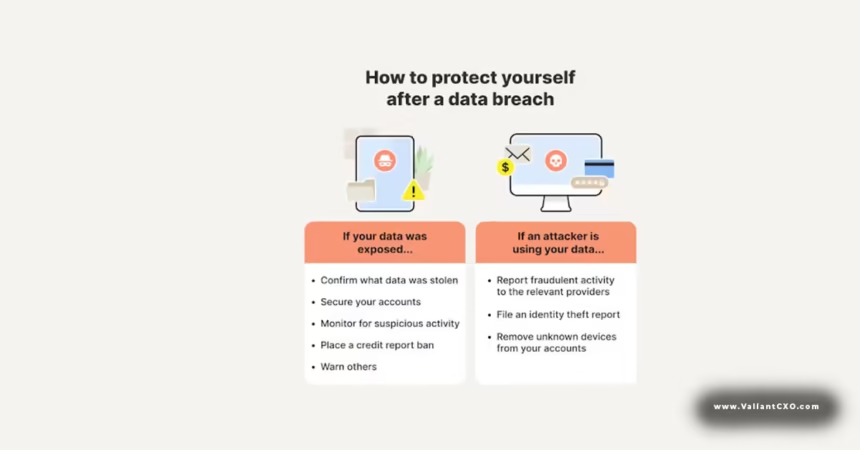
- Confirm the breach is real. Check the company’s official website, app, or verified social channels. Ignore random emails or texts that claim to be “from security.”
- Change the password on the affected account right away. Make it unique and long. If you reused that password anywhere else, change those accounts too.
- Enable two-factor authentication (2FA) or multi-factor authentication (MFA) if it’s available. An authenticator app or hardware key is stronger than SMS.
- Review recent account activity. Look for logins, orders, or changes you didn’t make.
In the ASOS case, the company stated payment cards and passwords were not believed to be impacted. Still treat every exposed email and phone number as potential phishing bait.
Lock Down Your Wider Digital Life
One compromised account often opens doors to others.
- Run a password audit. Use a reputable password manager to generate and store unique credentials for every site.
- Check whether your email appears in other known breaches. Free tools from Have I Been Pwned can show older exposures.
- Place a free credit freeze or fraud alert with the three major credit bureaus if you live in the United States. This stops most new accounts from being opened in your name.
- Monitor bank and credit-card statements daily for the next few weeks. Set up transaction alerts if your bank offers them.
Phishing follows almost every public breach. Attackers who know you shopped at ASOS can craft messages that look urgent and familiar. Never click links in unexpected emails or texts that reference the incident.
Clean Up Exposed Personal Information
Names and contact details are low-value on their own but high-value for social engineering.
- Remove any saved payment methods or addresses from the breached account that you no longer need.
- Update recovery email and phone numbers on important accounts so they point to addresses you still control.
- Consider a temporary virtual credit-card number for future online purchases if your bank provides one.
The ASOS Snowflake data breach push notification hack 2026 highlighted how third-party communication tools can become the weak link. Your personal response should assume attackers may already have basic identifying information.
Ongoing Habits That Reduce Future Damage
Breaches keep happening. Build habits that shrink the blast radius.
- Turn on login notifications for every account that offers them.
- Keep software and apps updated. Many breaches start with known vulnerabilities.
- Use unique recovery codes stored offline for critical accounts.
- Review app permissions every few months and revoke anything you no longer use.
If you manage a small business or side project, apply the same logic to your own tools: strong MFA on anything that can send customer messages, regular access reviews, and a ready-to-send customer notice template.
When to Escalate
Most people can handle the steps above themselves. Contact your bank or credit-card issuer immediately if you see unauthorized charges. File an identity-theft report with the Federal Trade Commission at IdentityTheft.gov if you notice new accounts or credit inquiries you didn’t start. In the United Kingdom, report concerns to Action Fraud.
Key Takeaways
- Change passwords and enable 2FA on the affected account the same day.
- Assume exposed emails and phone numbers will be used for phishing.
- Freeze credit or set fraud alerts if personal details leaked.
- Monitor financial statements and account activity for several weeks.
- Treat every unexpected “breach update” link as suspicious until verified.
- Build unique-password and MFA habits so the next breach hurts less.
The ASOS Snowflake data breach push notification hack 2026 showed how quickly a company-side incident can reach customers’ lock screens. Your fastest protection is the set of actions only you can take—password changes, 2FA, and careful monitoring. Start with the account that was hit, then expand outward. That sequence keeps the damage contained.
3 FAQs
What should I do first after learning about a data breach like the ASOS Snowflake data breach push notification hack 2026?
Change the password on the affected account immediately, enable two-factor authentication, and ignore any unexpected links that claim to be related to the incident. Confirm details only through the company’s official website or app.
Does a data breach always mean my payment card is at risk?
No. In many cases, including the ASOS Snowflake data breach push notification hack 2026, companies report that payment-card details and passwords were not accessed. Still monitor your statements and consider a credit freeze for extra protection.
How long should I watch for problems after a breach?
Keep a close eye on bank and credit-card activity for at least 4–6 weeks. Phishing attempts often continue for months, so treat any urgent messages referencing the breach with caution.