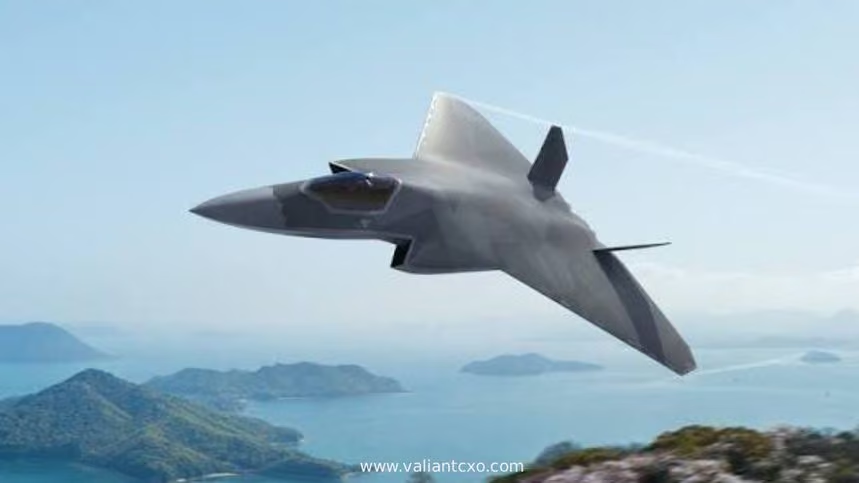
Global Combat Air Programme 2035 in-service date update still holds as the official target for the UK-Italy-Japan sixth-generation fighter, even as industry leaders float possible acceleration and new observers circle the program.
Here’s the quick picture as of late 2026:
- Official entry-into-service goal remains 2035 across the three partner governments.
- July 2026 locked in a £4.6 billion jointly funded contract to Edgewing for advanced concept and detailed design work through 2027.
- Leonardo has publicly discussed pushing first deliveries closer to 2033 by easing initial requirements, but that is not policy.
- Japan’s F-2 retirement schedule keeps Tokyo especially firm on the 2035 line.
- Canada sits as the first formal observer; Germany and Poland are exploring limited roles without decision rights that could slip the calendar.
The Global Combat Air Programme 2035 in-service date update matters because this jet is meant to replace Typhoons in UK and Italian service and F-2s in Japan while operating as a command node for collaborative combat aircraft. Slippage would create real capability gaps against peer threats. In my experience watching these multinational efforts, the calendar pressure is the single biggest discipline tool the partners have.
Where the Global Combat Air Programme 2035 in-service date update actually stands
GCAP launched in December 2022 when the UK’s Tempest effort and Japan’s F-X program merged with Italy. The structure is now clear: the GCAP International Government Organisation sets requirements; Edgewing (equal shares from BAE Systems, Leonardo, and Japan Aircraft Industrial Enhancement) holds design authority.
The big money move came in July 2026. The three nations awarded Edgewing a £4.6 billion contract covering the rest of the concept assessment phase (due end of 2027) plus early detailed design. The UK separately committed £8.6 billion over four years through its Defence Investment Plan. That funding supports thousands of jobs and keeps the industrial base warm.
Marco Zoff, Edgewing’s CEO, stated flatly at Farnborough that the 2035 service date “will not change even if a new country joins.” The pressure from the three capitals is that strong. Japan in particular needs the aircraft around the same time its F-2 fleet starts leaving service. Any new partner—Germany after the FCAS collapse, Poland, or others—must accept observer status or limited industrial roles that do not reopen the workshare or the schedule.
Leonardo CEO Lorenzo Mariani did float the idea of bringing first entry forward “by a couple of years” by modulating requirements on the initial version. Full capability would arrive in later increments. That remains a discussion, not a decision. Official statements from the governments continue to cite 2035.
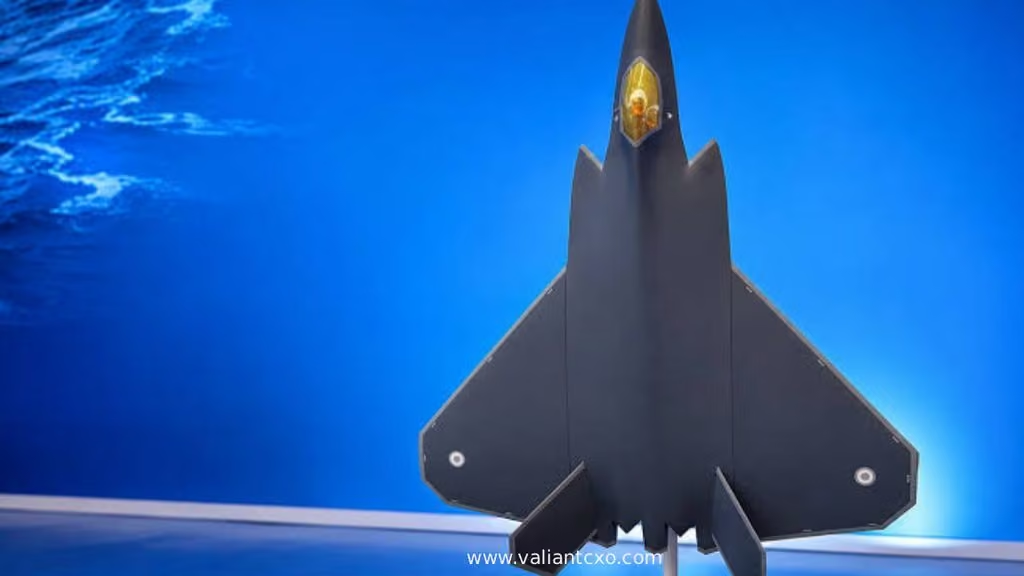
A UK demonstrator airframe is already in build, with flight testing expected around 2028. That aircraft will de-risk technologies that feed the production jet. The overall system is designed as more than a single airframe: it will act as a hub for uncrewed collaborative combat aircraft carrying sensors, electronic warfare payloads, and weapons. RAF leadership has even described GCAP as potentially the last crewed fighter the service will develop.
Key milestones at a glance
| Milestone | Status / Target | Notes |
|---|---|---|
| Concept assessment complete | End of 2027 | Funded under the £4.6 bn Edgewing contract |
| UK technology demonstrator first flight | ~2028 | National effort feeding GCAP tech |
| Detailed design & development | 2027 onward | Joint work across three nations |
| Official in-service date | 2035 | Still the binding government target |
| Possible earlier first tranche | Discussed for ~2033 | Would require reduced initial requirements |
Why the calendar is under real pressure
Combat aircraft programs almost always slip. Requirements grow, budgets tighten, and industrial partners argue over workshare. GCAP has tried to short-circuit that pattern by locking industrial terms early and refusing to reopen the schedule for late joiners. The collapse of the Franco-German-Spanish FCAS effort only increased interest in GCAP, which raised the risk of schedule disruption. Partners responded by offering observer status rather than full membership that would force renegotiation.
What I’d do if I were advising a partner government right now: treat the 2035 date as non-negotiable for planning purposes. Build your force structure assumptions around that year. Any acceleration talk is useful for industrial urgency, but do not bank on it until contracts and requirements documents actually change.
Step-by-step action plan for tracking the Global Combat Air Programme 2035 in-service date update
- Bookmark the primary industrial and government channels—Edgewing statements, UK Defence Investment Plan updates, and official Japanese Ministry of Defense releases. These move first.
- Watch the end-2027 concept assessment gate. That is the next hard decision point where requirements and schedule either lock tighter or adjust.
- Monitor observer nation activity. Canada’s entry set the template; any German or Polish move will signal how open the industrial workshare remains.
- Separate demonstrator progress from production aircraft progress. The UK demonstrator flying in 2028 is good news, but it is not the same as a production-standard jet clearing service entry.
- Cross-check claims of acceleration against official government language. Industry CEOs can float ideas; only the three capitals can change the formal target.
Common mistakes and how to fix them
Mistake one: treating every industry comment as policy. Mariani’s 2033 discussion generated headlines, yet governments still say 2035. Fix: always pair industry remarks with the latest official statements from the three capitals.
Mistake two: assuming new partners automatically delay the program. Edgewing leadership has said the opposite—new countries can be accommodated without timeline impact if they accept limited roles. Fix: track the actual terms offered (observer versus full partner) rather than the speculation.
Mistake three: focusing only on the crewed jet. GCAP is a system-of-systems effort. Missing the collaborative combat aircraft piece understates the capability. Fix: read every update with both the manned platform and the uncrewed team in view.
Mistake four: comparing GCAP schedules directly to U.S. NGAD or F-47 timelines without accounting for different industrial and political structures. The programs face different constraints. Fix: judge GCAP against its own stated 2035 goal and the specific retirement schedules of Typhoon and F-2 fleets.
Key Takeaways
- The binding Global Combat Air Programme 2035 in-service date update remains 2035 across UK, Italian, and Japanese government policy.
- A major £4.6 billion design contract and UK’s £8.6 billion four-year commitment put real money behind the schedule in 2026.
- Acceleration to roughly 2033 has been discussed by industry if initial requirements are eased, but it is not official policy.
- New partners are being steered toward observer status precisely to protect the 2035 target.
- Japan’s F-2 retirement schedule gives Tokyo strong incentive to hold the line.
- A UK demonstrator is on track for flight testing around 2028 as a risk-reduction tool.
- The aircraft is designed from the start to operate with uncrewed collaborative combat aircraft.
The partners have so far kept the calendar discipline that most multinational fighter programs lose early. Whether that holds through the detailed design phase and into production will decide if the Global Combat Air Programme 2035 in-service date update stays a firm plan or becomes another aspirational target. For planners, industrial teams, and analysts watching the shift to sixth-generation air power, the next hard checkpoint is the end of the concept assessment phase in 2027. Watch that gate closely—everything else flows from it.
FAQs
What is the latest official Global Combat Air Programme 2035 in-service date update?
Governments of the UK, Italy, and Japan continue to target service entry from 2035. Industry discussion of an earlier first tranche exists, but the formal date has not changed.
Could new countries joining GCAP push the 2035 date?
Edgewing leadership has stated the timeline will not change even if additional countries join, provided they accept arrangements that do not reopen the core workshare or requirements.
How does the Global Combat Air Programme 2035 in-service date update compare with possible acceleration talk?
Leonardo has said ministers have asked about bringing first deliveries forward by roughly two years through reduced initial requirements. That remains a proposal under discussion, not a revised official target.