
GLP-1 weight loss medication guide content is everywhere right now, but most of it either oversimplifies (“miracle shot!”) or drowns you in jargon and fine print. You need something in between: clear, practical, and brutally honest about what these drugs can and can’t do.
Used right, GLP‑1 meds can be life‑changing. Used casually or without a plan? They can turn into yet another short-term fix with long-term regain.
This guide breaks down how GLP‑1 medications work, who they’re for, what to expect, and how to protect your results over the long haul.
Quick-start summary: GLP-1 weight loss medication guide
- GLP‑1 weight loss medications mimic a natural hormone that helps regulate appetite, blood sugar, and digestion, leading many people to eat less without white‑knuckling it.
- These medications are approved for chronic weight management in people with obesity or overweight plus certain health conditions, under medical supervision.
- Results can be impressive, but they’re not magic; without nutrition, movement, and habit changes, weight often returns when the drug stops.
- Side effects, cost, and supply issues are real; making a long‑term plan with your clinician is non‑negotiable.
- If you’re considering GLP‑1 meds, also think ahead about what happens next — for example, how you’ll handle transitions, like exploring Foundayo weight loss results after switching from Zepbound as part of a longer journey.
What are GLP‑1 weight loss medications?
Let’s strip out the fluff.
GLP‑1 stands for glucagon-like peptide-1, a hormone your body naturally produces in the gut. It helps:
- Regulate appetite
- Slow stomach emptying
- Support blood sugar control
GLP‑1 weight loss medications are prescription drugs that mimic or enhance this hormone’s action so you:
- Feel full sooner
- Stay full longer
- Experience fewer cravings
- Often spontaneously eat fewer calories
Some common GLP‑1 or GLP‑1–based medications used for weight management include:
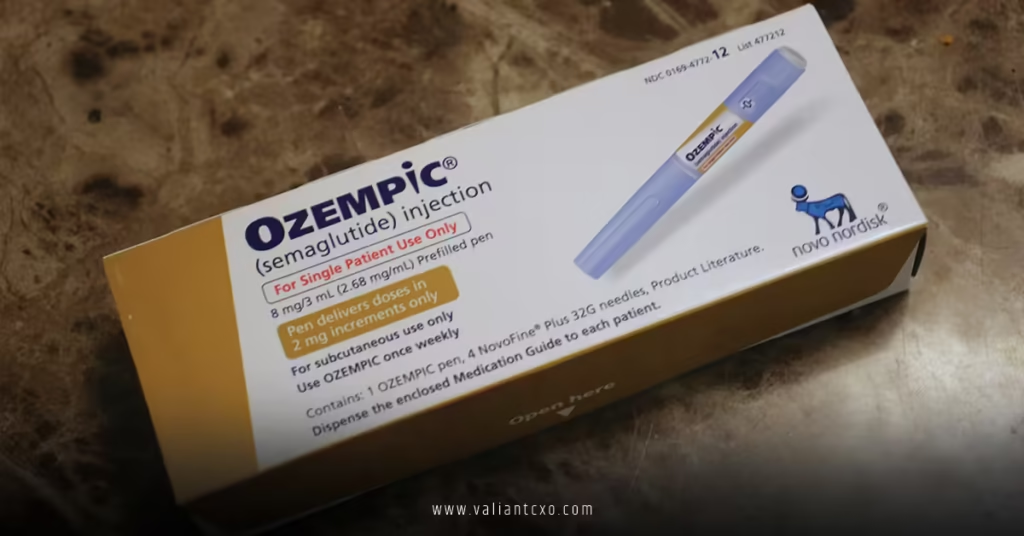
- Semaglutide (e.g., Wegovy for weight loss, Ozempic for diabetes with off-label weight use)
- Liraglutide (e.g., Saxenda for weight loss, Victoza for diabetes)
- Tirzepatide (a dual GIP/GLP‑1 agonist; Zepbound for weight loss, Mounjaro for diabetes)
These medications aren’t over-the-counter and should be prescribed and monitored by a healthcare professional, typically following guidelines for chronic weight management like those endorsed by the American Diabetes Association and Obesity Medicine Association.
How GLP‑1 medications help with weight loss
Here’s the simple version of how they work in the real world.
People on GLP‑1 meds often notice:
- Smaller portions feel “enough”
- Less “food noise” — constant thinking about eating
- Reduced urge for mindless snacking
- Smoother blood sugar, fewer crashes
Biologically, GLP‑1 meds:
- Act on receptors in the brain to reduce appetite
- Slow gastric emptying, so food stays in the stomach longer
- Help improve insulin secretion and reduce glucagon, which supports better blood sugar control
When you combine that with even halfway decent food choices, your total calorie intake drops — sometimes dramatically — without feeling like a constant fight.
Sounds great, right? And for many, it is.
But here’s the kicker: if you rely only on the drug and never build better habits, you’re playing a short game, not a long one.
Who are GLP‑1 weight loss medications for?
These meds aren’t meant for anyone who just wants to drop 5 vanity pounds before a trip.
They’re typically prescribed for:
- Adults with a BMI ≥ 30 (obesity), or
- Adults with a BMI ≥ 27 (overweight) and at least one weight-related condition (e.g., high blood pressure, type 2 diabetes, high cholesterol), according to criteria often referenced by the U.S. Food & Drug Administration.
Even then, they’re usually part of a bigger plan that includes lifestyle changes:
- Nutrition
- Physical activity
- Behavior and habit modification
- Regular monitoring
If your doctor treats this like a quick fix and not chronic disease management, push for a more complete plan or get a second opinion.
Types of GLP‑1 medications commonly used in weight loss
You’ll hear a lot of brand names and generic names. Here’s how they roughly sort out.
1. Semaglutide (GLP‑1 agonist)
- Used as: Wegovy (weight loss), Ozempic (diabetes; often used off-label for weight)
- How it’s taken: Once-weekly injection
- What people notice: Strong appetite suppression, significant early weight loss for many
2. Liraglutide (GLP‑1 agonist)
- Used as: Saxenda (weight loss), Victoza (diabetes)
- How it’s taken: Daily injection
- What people notice: Appetite reduction, but typically less dramatic than the highest-dose weekly meds
3. Tirzepatide (GIP/GLP‑1 dual agonist)
- Used as: Zepbound (weight loss), Mounjaro (diabetes)
- How it’s taken: Once-weekly injection
- What people notice: For many, even more powerful appetite and weight loss effect than single GLP‑1 agonists, which is why you hear so many success stories — and also why transitions off drugs like these need serious planning.
Pros and cons of GLP‑1 weight loss medications
Use this GLP‑1 weight loss medication guide to weigh your options, not just chase a trend.
| Factor | Pros | Cons / Watch-outs |
|---|---|---|
| Effect on Appetite | Often dramatically reduced hunger and cravings; easier to eat less | Some people feel “too full” or nauseated, especially at higher doses |
| Weight Loss | Significant average weight loss seen in clinical trials when combined with lifestyle changes | Results vary; weight can return when medication stops if habits aren’t changed |
| Health Impact | Can improve blood sugar, blood pressure, and other markers in people with obesity and/or diabetes | Not a standalone cure; still need lifestyle, and there can be medical contraindications |
| Convenience | Weekly injections for some options; no daily pills to remember | Needles, prescription refills, sometimes tricky titration schedules |
| Side Effects | Many people tolerate them well after an adjustment phase | Common issues: nausea, vomiting, diarrhea, constipation, abdominal discomfort |
| Cost & Access | If covered by insurance, can be affordable for some patients | Without coverage, out-of-pocket costs can be high; supply issues have occurred |
Safety, side effects, and what to ask your doctor
You’ve probably already heard the marketing. This is the part to pay equal attention to.
Common side effects include:
- Nausea
- Vomiting
- Diarrhea or constipation
- Bloating or abdominal pain
- Decreased appetite
These often show up during dose escalation and may ease over time, especially if you:
- Eat smaller portions
- Avoid very high-fat meals
- Increase fiber gradually
- Stay hydrated
More serious risks exist, which is why these medications require medical supervision. Your clinician may review issues such as:
- Personal or family history of certain thyroid cancers
- History of pancreatitis
- Gallbladder disease
- Kidney function
- Other medications you’re taking
Before starting a GLP‑1 or GLP‑1–based medication, questions worth asking:
- “What specific benefit are we targeting — weight, blood sugar, both?”
- “What’s the plan if I respond too strongly or not at all?”
- “How long do you expect me to stay on this, assuming no problems?”
- “What’s our strategy to prevent regain if we lower or stop the dose?”
- That last question matters a lot — especially for people who may eventually transition to other programs or approaches, like those interested in learning about Foundayo weight loss results after switching from Zepbound.
How much weight can you lose on GLP‑1 medications?
Short answer: often a lot. But it depends.
In large clinical trials of GLP‑1 and dual agonists used for weight, many participants lost a significant percentage of their body weight over months when combining medication with lifestyle changes, as reported in major medical journals and summaries you can find via trusted medical sources like the National Institutes of Health.
But those are averages under tightly controlled conditions. Real-life outcomes vary based on:
- Dose and adherence
- Starting weight and health status
- Nutrition quality and calorie intake
- Movement and resistance training
- Sleep and stress
- How long you stay on the medication
In practice, what usually happens is:
- The first several months bring strong, visible changes.
- Then the pace slows.
- You hit plateaus.
- The game shifts from aggressive loss to long-term management.
If you go in expecting a straight-line graph downwards, you’ll be disappointed. If you expect a steep slope that flattens into a long, gradual decline, you’ll be more aligned with reality.
How to maximize results on GLP‑1 meds (without burning out)
Think of GLP‑1 meds as power tools. If you use them to build something solid, fantastic. If you wave them around with no plan, damage happens.
1. Prioritize protein
Even with lower appetite, you want to protect muscle and keep hunger manageable when the dose stabilizes or eventually decreases.
- Aim for a protein source at every meal.
- Many adults do well targeting roughly 25–35g per meal, adjusted for individual needs.
2. Keep your meals boringly consistent
You don’t need fancy recipes. You need repeatable patterns.
- 2–3 main “go‑to” breakfasts
- 2–3 lunches you can assemble on autopilot
- A few dinners that balance protein, fiber, and reasonable carbs/fats
The more you automate, the less your brain has to fight itself.
3. Lift something
GLP‑1 meds help with weight loss, but they don’t magically preserve muscle. That’s your job.
- 2–3 weekly resistance sessions (weights, machines, bands, or bodyweight)
- Focus on big movements: squats, pushes, pulls, hinges, presses
You’re not training for a bodybuilding show. You’re trying to keep the weight you lose from being all muscle and water.
4. Plan for plateaus
When the scale flattens out:
- Check your logging (are portions creeping up?).
- Tighten up weekend habits.
- Adjust calories if needed, but don’t crash diet.
- Consider whether your current dose, routine, or training needs a tweak with your care team.
Plateaus are feedback, not failure.
Long-term strategy: what happens when you lower or stop GLP‑1 meds?
Here’s where most people under-plan.
GLP‑1 weight loss medication guide or not, if you stop these drugs without a strategy, your body will likely push back:
- Hunger rises
- Food thoughts return
- Weight may drift upward
The key is thinking about your “after” plan before you reach it.
Some people:
- Stay on a maintenance dose long term, under medical supervision.
- Transition to different medications or combinations.
- Lean more heavily on structured programs, coaching, and habits as meds taper down.
This is where looking at real-world transitions, such as Foundayo weight loss results after switching from Zepbound, becomes valuable. They show what happens when you move from a heavy‑hitting injectable to a broader, more holistic system with coaching, tracking, and tailored strategies.
The main takeaway: the medication phase is just one chapter. You need the sequel written in advance.
Step-by-step: deciding if GLP‑1 meds are right for you
Use this as a practical roadmap.
- Check your eligibility
- Know your BMI, current conditions, and medications.
- Talk with a clinician who actually understands obesity treatment, not just weight loss fads.
- Clarify your goals
- Is it weight, blood sugar, reducing medication load for other conditions, or all of the above?
- Set a 12–24 month horizon, not just a 3‑month “drop fast” window.
- Discuss options and trade-offs
- Which GLP‑1 or combination makes sense for your profile?
- What are the cost and coverage realities?
- How will dose increases be handled?
- Set your lifestyle baseline
- Before or as you start, establish:
- A protein target
- A simple movement plan
- A minimal tracking system (calories, macros, or photos + notes)
- Before or as you start, establish:
- Get a maintenance and exit plan in writing
- Ask your clinician:
- “What’s our plan at 6, 12, and 18 months?”
- “If we reduce or stop, how do we prevent large regain?”
- Consider programs, coaching, or structured systems to support that phase.
- Ask your clinician:
Common myths about GLP‑1 weight loss medications
Let’s clean up a few misconceptions.
Myth 1: They’re a magic fix; you’ll never have to think about food again.
Reality: They help a lot with appetite, but you still have to decide what to eat, how to move, and how to live.
Myth 2: Once you’re off, you’re doomed to regain everything.
Reality: Regain risk is real if nothing else changes, but with strong habits, some people maintain most of their loss. It’s not guaranteed failure; it’s a question of planning.
Myth 3: GLP‑1 meds are only for “people who won’t try hard enough.”
Reality: Obesity is classified as a chronic disease by major medical bodies. Using evidence‑based medication doesn’t mean you’re lazy; it means you’re treating a condition with appropriate tools.
Key takeaways from this GLP‑1 weight loss medication guide
- GLP‑1 weight loss medications mimic a natural hormone that helps control appetite and blood sugar, making it easier to eat less and lose weight.
- They’re approved for people with obesity or overweight plus health conditions and should always be used under medical supervision.
- Side effects, cost, and long‑term strategy must be part of the decision, not an afterthought.
- Results can be impressive, but sustainable success depends on nutrition, movement, and habit systems built alongside the medication.
- Planning ahead for what happens when doses change or meds stop is just as important as deciding to start — whether that means ongoing treatment, lifestyle‑only maintenance, or structured support like the kind you’d review when looking at Foundayo weight loss results after switching from Zepbound.
- Treat this as long-term health management, not a crash diet with a syringe.
FAQs: GLP‑1 weight loss medication guide
1. How fast will I lose weight on GLP‑1 medication?
It varies. Many people see noticeable changes in the first few months, with faster loss early and slower, more gradual changes later. The exact pace depends on your dose, adherence, starting point, and how consistent you are with food and movement.
2. Can I stay on GLP‑1 weight loss medication forever?
For some people, long‑term or even indefinite use is part of the plan, similar to long‑term treatment for other chronic conditions. That decision should be made with your clinician, based on your health profile, side effects, goals, and how you respond to the medication over time.
3. What happens if my insurance stops covering my GLP‑1 medication?
If coverage changes, don’t panic‑quit on your own. Talk with your healthcare provider about alternatives: other medications, dose adjustments, patient assistance programs, or transitioning to structured programs and habits to protect your progress. This is where having a backup strategy — and understanding paths like Foundayo weight loss results after switching from Zepbound — becomes especially useful.