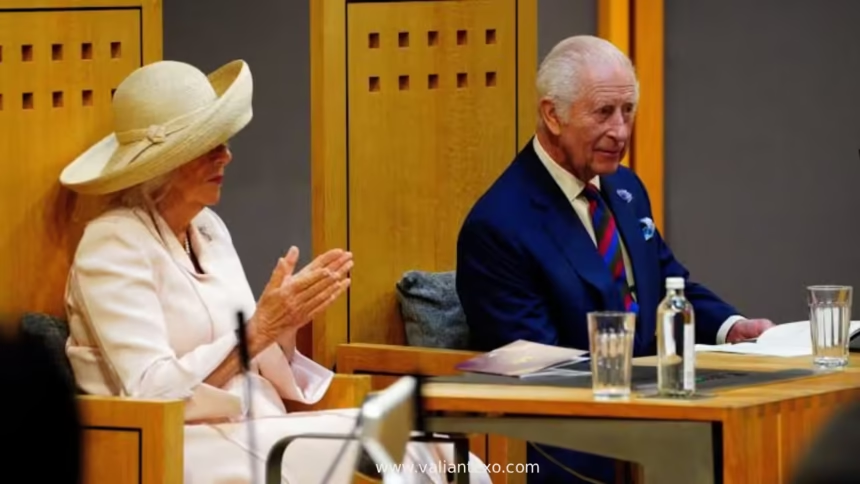
Hanan Issa poem rejected Senedd opening King Charles landed like a gut punch to anyone who thinks ceremonial moments should still leave room for truth-telling. On the eve of King Charles and Queen Camilla’s first full ceremonial opening of the seventh Senedd term, Wales’ National Poet found her commissioned work quietly sidelined. Officials called it a mismatch for an “apolitical” celebration. Issa called it something else entirely.
Here’s the quick rundown of what went down and why it sticks:
- Hanan Issa, National Poet of Wales since 2022 and the first Muslim to hold the post, was asked to write and perform a poem celebrating newly elected Members of the Senedd while reminding them of their duty to the people.
- She delivered “To Grow,” weaving in real pressures facing Welsh communities—drought, floods, data-centre water use, women’s health cuts, the pause on trans healthcare, and Gaza-linked concerns.
- Both the original and a toned-down second draft were rejected by the Senedd Commission.
- The decision sits against a backdrop of a new Plaid Cymru-led government and a monarch making his first post-election appearance in the Siambr.
The whole episode forces a blunt question: when the national poet is told to keep politics out of the parliament that exists to do politics, who exactly is being protected?
What the Brief Actually Said
Issa was handed clear instructions. Celebrate the Members’ election wins. Serve as a reminder of their commitment to the people of Wales. And—crucially—the Senedd said she could execute the piece “as they wish.” It even floated the idea of gathering voices from across constituencies.
She took that seriously. She spoke to people. She framed Wales as a garden and the Members as its gardeners, drawing on Saunders Lewis’s old image of the nation as a vineyard. Then she planted the issues that keep ordinary households awake at night.
The first version named those issues outright. Feedback came back: too political for an apolitical ceremony. She reworked it into more abstract imagery. Still rejected. The Commission’s public line stayed polite: after a development process the poem was “not the right fit.” They still “admire and value” her work.
Issa’s response cut sharper. “This is the chamber where political discussion is had, and this very much says that political discussion framed as a poem is not welcome.” Neutrality, she noted, is itself a political choice.
Hanan Issa poem rejected Senedd opening King Charles: The Timeline That Matters
Hanan Issa poem rejected Senedd opening King Charles The story broke in the final 48 hours before the 15 October 2026 ceremony. Media briefings had already listed Issa’s reading as part of the programme. Then Instagram posts and independent reporting made clear the poem would not be heard in the Siambr while the King spoke.
King Charles and Queen Camilla still attended. The First Minister, Rhun ap Iorwerth, still spoke. The mace still processed. Schoolchildren still lined up. The poetry slot simply vanished.
That absence now sits as the defining footnote of the day.
Why the Rejection Hits Harder Than a Single Missed Reading
In my experience covering cultural flashpoints, institutions rarely reject art because they dislike the syllables. They reject it when the art does the job the brief claimed to want—reminding power of its obligations—and does it too clearly.
Wales has a long tradition of poets speaking inconvenient truths. The National Poet role exists precisely to keep that tradition alive. Issa’s tenure has already produced pieces on NHS workers, extreme weather, and women’s statues. She is not a latecomer to public themes. The Senedd knew exactly who they commissioned.
The kicker is the setting. A parliament that expanded to 96 Members after the May election, now led by a party with deep republican roots, still felt the need to scrub a poem for a royal visit. That tension is not abstract. It is structural.
Side-by-Side: What Was Asked Versus What Happened
| Element | Original Brief | Final Outcome |
|---|---|---|
| Purpose | Celebrate election achievements + remind of duty to Welsh people | Poem excluded entirely |
| Creative freedom | “Execute the poem as they wish” | Both versions rejected |
| Tone expected | Celebratory yet grounding | Deemed insufficiently apolitical |
| Public response | Programme listed the reading | Slot removed; poet voices disappointment |
| Institutional statement | Respect for artistic independence | “Not the right fit for this occasion” |
The gap between the two columns is where the real story lives.
Step-by-Step Action Plan for Beginners Who Want to Follow or Discuss This Story
- Start with the primary statements. Read Issa’s own words and the Senedd Commission reply. Ignore secondary spin until you have those.
- Map the issues named in the poem against current Welsh policy debates—water use, health waiting lists, climate extremes. The poem did not invent them.
- Check the constitutional context. The Senedd Commission is not the Welsh Government. Decisions about ceremonial content sit with the parliamentary body itself.
- Watch how other cultural institutions respond in the coming weeks. National poets rarely stay silent after a public rejection.
- If you write or teach, treat the episode as a live case study in the limits of “apolitical” public art. Ask students or readers where they would draw the line.
Hanan Issa poem rejected Senedd opening King Charles That sequence keeps you grounded in verifiable facts rather than the noise that always follows a royal visit.
Common Mistakes & How to Fix Them
People new to Welsh politics often assume every decision involving the Senedd is driven by the First Minister’s office. Wrong. The Commission operates independently on ceremonial matters. Fix: always distinguish the two bodies.
Another frequent slip is treating the rejection as pure censorship. The Commission framed it as fit-for-purpose. Fair enough. But dismissing Issa’s point that the brief itself invited political content is equally incomplete. Fix: hold both statements side by side and let the contradiction stand.
Third mistake: reducing the story to “poet versus King.” The monarch did not commission or reject the poem. The institutional host did. Fix: keep the actual decision-makers in the frame.
Hanan Issa poem rejected Senedd opening King Charles and the Wider Pattern
Hanan Issa poem rejected Senedd opening King Charles This is not the first time a national poet has tested institutional comfort zones. It will not be the last. What makes this instance sharp is the explicit brief that invited a reminder of duty, followed by the decision that the reminder had gone too far.
Poetry at state occasions has always walked a tightrope. Sometimes the rope is cut. When that happens, the absence itself becomes the most political statement in the room.
If you want the full institutional record, the BBC coverage of the Senedd opening lays out the sequence cleanly. For deeper background on Issa’s appointment and earlier work, Literature Wales’ announcement of her tenure remains the official source. Independent reporting that first detailed the dual rejections sits in Will Hayward’s midweek briefing.
Key Takeaways
- Hanan Issa was commissioned to write and read a poem for the ceremonial opening of the seventh Senedd in the presence of King Charles.
- Both her original poem “To Grow” and a revised, more abstract version were rejected for being insufficiently apolitical.
- The brief had explicitly invited a reminder of Members’ commitments to the people of Wales and given her creative latitude.
- The Senedd Commission stands by the decision while affirming respect for her independence.
- Issa’s public response frames the rejection as a statement that political discussion via poetry is unwelcome in the very chamber built for politics.
- The episode highlights ongoing tension between ceremonial neutrality and the lived realities poets are asked to reflect.
- Future national poets and commissioning bodies now have a clear recent precedent to navigate.
Hanan Issa poem rejected Senedd opening King Charles The real test arrives in the months ahead. Will the poem surface elsewhere? Will other cultural bodies invite the reading the Senedd declined? Or will the silence become the lasting official memory of the day?
Track the next public reading. That is where the conversation moves from ceremony to consequence.
FAQs
Why was the Hanan Issa poem rejected for the Senedd opening with King Charles?
Senedd Commission officials decided both the original and revised versions of “To Grow” did not fit an occasion they described as celebratory and apolitical, even though the commissioning brief had asked for a reminder of duty to the Welsh people.
Did Hanan Issa change the poem after the first rejection?
Yes. She produced a second draft that shifted specific references into more abstract imagery. That version was also turned down.
What happens next with the Hanan Issa poem rejected Senedd opening King Charles story?
The poem remains the poet’s work. Expect public readings, possible publication, and continued debate about the boundaries of official cultural commissions in Wales.