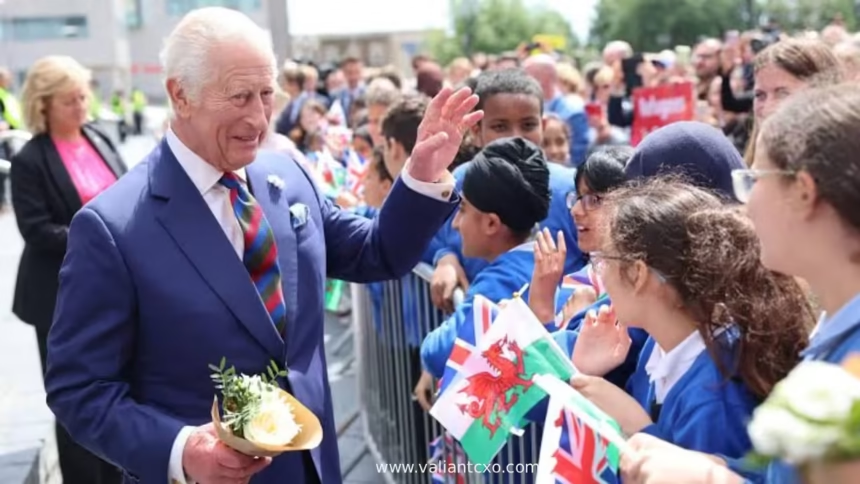
National Poet of Wales role and history sits at the heart of how a small nation keeps its voice sharp, public, and unapologetic. Established in 2005, the post turns one writer into a living bridge between everyday Welsh life and the country’s formal stages. The current holder, Hanan Issa, has made that bridge more visible than ever—especially after the recent Hanan Issa poem rejected Senedd opening King Charles episode forced a hard look at what the job actually demands.
Here’s the short version of what the role is and why it matters:
- Created by Literature Wales (then Academi) to give poetry an official platform at national moments.
- Alternates, in practice, between English-language and Welsh-language poets.
- Involves commissions, public readings, workshops, and cultural ambassadorship at home and abroad.
- Funded with support from the Arts Council of Wales Lottery.
- Five poets have held the post so far, each stretching the job’s boundaries in different ways.
The role is not a ceremonial ribbon. It is a working brief that expects the poet to show up when the nation marks big occasions—and sometimes to push against the comfort of those occasions.
How the National Poet of Wales Role Began
In May 2005 the post was born. Peter Finch and the Academi had spent years arguing that Wales needed a dedicated national poetic voice, one that could speak in both languages and reach beyond literary circles. The Arts Council backed it. The first appointment was short—one year—to test the idea.
Gwyneth Lewis took the inaugural post. She wrote the words carved on the Wales Millennium Centre. That set a tone: the job would leave permanent marks.
Gwyn Thomas followed for two years. Then Gillian Clarke stretched the tenure to eight years (2008–2016). Under her the role grew teeth. She performed across continents, took commissions that travelled far outside Wales, and proved the post could carry real weight.
Ifor ap Glyn held it from 2016 to 2022. A Welsh-language poet and broadcaster, he brought the role into television studios and international festivals while keeping the language question front and centre.
Hanan Issa arrived in July 2022 after the first public nomination process. She became the fifth holder and the first Muslim National Poet of Wales. Her initial three-year term has continued into 2026, giving her the platform that produced the poem later rejected for the Senedd’s ceremonial opening with King Charles.
What the Job Actually Requires
Literature Wales describes the National Poet as an ambassador who represents Wales’s diverse cultures and languages. In practice the work splits into three clear lanes:
- Commissions – poems for national anniversaries, health campaigns, climate events, or parliamentary moments.
- Public presence – festivals, schools, official openings, and international tours.
- Advocacy – pushing the idea that literature belongs to everyone, not just those already inside literary circles.
The poet is expected to be political with a small “p”—engaged with the life of the nation without becoming a party mouthpiece. That tightrope is exactly what made the Hanan Issa poem rejected Senedd opening King Charles story so revealing. The brief invited a reminder of duty to the Welsh people. The final decision showed how quickly “reminder” can be re-labelled “too political.”
National Poet of Wales Role and History: The Holders at a Glance
| Poet | Tenure | Language Focus | Notable Contribution | Length |
|---|---|---|---|---|
| Gwyneth Lewis | 2005–2006 | English | Wales Millennium Centre inscription | 1 year |
| Gwyn Thomas | 2006–2008 | Welsh | Early consolidation of the post | 2 years |
| Gillian Clarke | 2008–2016 | English | Global reach and long-form visibility | 8 years |
| Ifor ap Glyn | 2016–2022 | Welsh | Media presence and language advocacy | 6 years |
| Hanan Issa | 2022–present | English (with Welsh forms) | First Muslim holder; public nomination process | Ongoing |
National Poet of Wales role and history The table shows a pattern: early short tenures gave way to longer ones as the role proved its value. The 2022 appointment marked another shift—public nominations instead of closed selection.
Step-by-Step: How Someone Becomes National Poet of Wales
- Literature Wales opens a public call for nominations (individuals, organisations, or self-nominations).
- Eligibility is checked—living poets with a clear connection to Wales.
- A selection panel shortlists candidates.
- Shortlisted poets submit a fuller application and face interview.
- The successful candidate is announced and begins a fixed term (recently three years, with possible extension).
That open process is relatively new. Earlier appointments were quieter. The change reflects a deliberate push for wider ownership of the role.
Common Mistakes People Make About the Role
People often treat the National Poet of Wales as a pure Welsh-language post. It isn’t. The job alternates and has always included strong English-language voices. Fix: check the actual holders rather than assuming language exclusivity.
Another frequent error is thinking the poet works for the Senedd or the Welsh Government. The post sits with Literature Wales, an independent literature development body. Fix: separate the cultural organisation from the political institutions it sometimes collaborates with—especially relevant after the Hanan Issa poem rejected Senedd opening King Charles decision.
National Poet of Wales role and history A third slip is viewing the role as purely ceremonial. The best holders have used it to surface difficult material. Fix: read the actual commissions. They rarely stay polite for long.
Why the Role Still Matters in 2026
National Poet of Wales role and history Wales has a poetic tradition that runs back to the Cynfeirdd and the Poets of the Princes. The modern National Poet is the latest formal expression of that continuity. It keeps poetry visible at moments when the nation is looking at itself—elections, royal visits, climate crises, health anniversaries.
When a poem written for the Senedd opening is set aside, the role itself becomes the story. That is not a failure of the post. It is proof that the post still carries enough weight to create friction. Friction is useful. It shows the machinery is still alive.
For the official description of the post and current holder, see Literature Wales’ National Poet of Wales page. The historical list of holders is cleanly summarised on the Wikipedia National Poet of Wales entry. Background on the 2022 public nomination process sits in Literature Wales’ original call for nominations.
Key Takeaways
- The National Poet of Wales was established in 2005 by what is now Literature Wales.
- Five poets have held the post; tenures have lengthened as the role matured.
- Duties include commissions, public appearances, and cultural ambassadorship across both languages.
- The 2022 appointment introduced public nominations for the first time.
- Hanan Issa is the current holder and the first Muslim poet in the role.
- The recent Hanan Issa poem rejected Senedd opening King Charles episode tested the boundary between celebration and critique that every National Poet must navigate.
- The post remains independent of government while regularly intersecting with official national moments.
National Poet of Wales role and history The next appointment will tell us whether the role continues to expand or tightens under institutional caution. Watch the nomination process when it opens. That is where the real direction of the National Poet of Wales will be decided.
FAQs
What is the National Poet of Wales role?
It is a funded position, managed by Literature Wales, that appoints a poet to represent and celebrate writing from Wales at home and abroad through commissions, events, and advocacy.
How long does a National Poet of Wales serve?
Early terms were one or two years. Later holders served six or eight years. Recent appointments have been set at three years, with possible extension.
Why does the Hanan Issa poem rejected Senedd opening King Charles matter to the role’s history?
It showed, in real time, the tension between the job’s brief to engage with the life of the nation and the desire of some institutions for purely celebratory content at formal occasions.