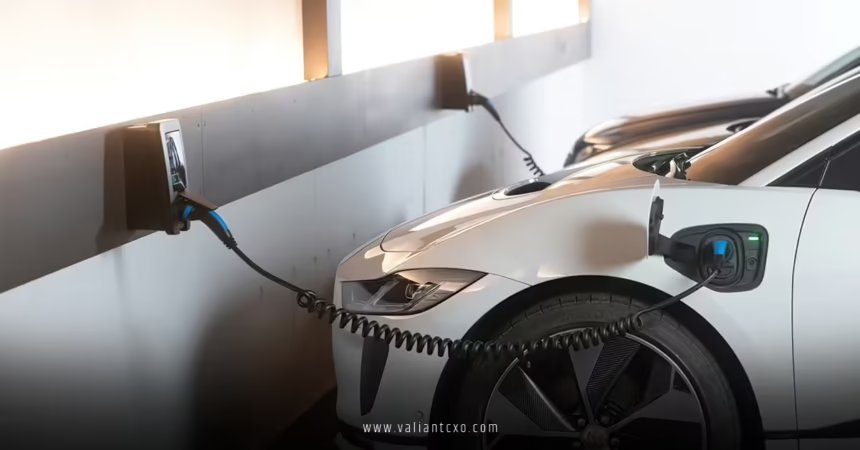
Pod EO Charging acquisition fleet depot solutions deliver a powerful boost for fleet operators eyeing reliable, cost-effective electrification. This recent move combines Pod’s smart charging expertise with EO Charging’s specialized depot software and hardware, creating end-to-end tools tailored for commercial fleets.
It matters because depot charging remains the backbone of fleet electrification. Vehicles return nightly, get juiced up smartly, and roll out ready—without the chaos of public chargers. In the US, where grid constraints hit hard in logistics hubs and urban depots, these integrated solutions cut downtime, slash energy bills, and simplify scaling.
- What it is: A merged platform offering hardware installation, intelligent software for scheduling and load management, plus energy flexibility features.
- Why it matters: Helps fleets navigate power limits, optimize costs, and meet tightening emissions rules.
- Key benefits: Better uptime, lower total cost of ownership, and easier grid compliance.
- Who needs it: Delivery services, transit operators, and logistics companies with return-to-depot models.
- 2026 angle: Acquisition accelerates innovation exactly when US fleets accelerate their EV shift.
The kicker? Many operators still treat charging as an afterthought. Get it right upfront, and the rest falls into place.
Why Depot Charging Wins for Fleets in 2026
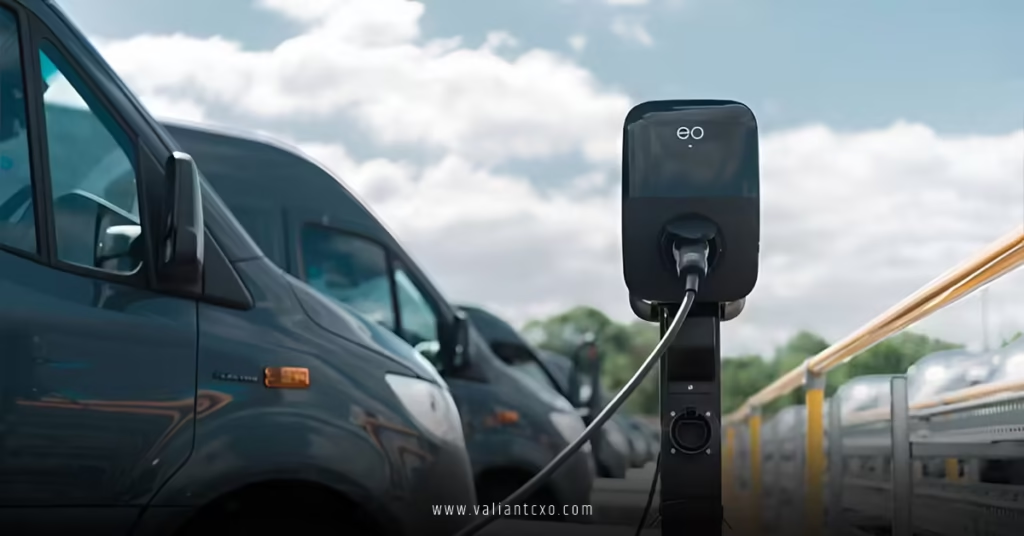
Depot solutions shine for predictable routes. Overnight or midday top-ups at base beat hunting public stations. Pod EO Charging acquisition fleet depot solutions strengthen this by blending robust hardware with cloud-based management that predicts needs, balances loads, and even taps flexibility markets.
US fleets face unique headaches: aging electrical infrastructure, high demand charges, and varying state incentives. Smart systems mitigate these by staggering charges during off-peak hours or using battery buffers.
Here’s a quick comparison of charging approaches:
| Approach | Best For | Pros | Cons | Typical Power Range |
|---|---|---|---|---|
| Depot (Centralized) | Return-to-base fleets | Controlled costs, high utilization, software optimization | Upfront infrastructure investment | L2 (AC) to 350+ kW DC |
| Public Opportunity | Mixed or en-route | No depot needed | Higher per-kWh costs, downtime risk | Variable |
| Mobile/On-Demand | Temporary or constrained sites | Fast deployment | Limited scale, higher operational cost | Up to 150 kW |
Data reflects industry norms from major US deployments as of 2026.
Breaking Down Pod EO Charging Acquisition Fleet Depot Solutions
The acquisition pairs Pod’s energy management smarts with EO’s depot-focused platform. Expect tighter integration for monitoring, predictive maintenance, and telematics links. For US operators, this signals maturing global tech adaptable through local partners and compliant hardware (think J1772, CCS1, NACS).
In practice, you get:
- Hardware mix: AC for steady overnight, DC fast for quick turns.
- Software layer: Real-time visibility, automated scheduling, fault alerts.
- Energy smarts: Dynamic load balancing to avoid peak penalties.
What usually happens is fleets underestimate site power capacity. A solid solution audits first and designs around it.
Step-by-Step Action Plan for Beginners
Roll up your sleeves. Here’s how I’d tackle a depot project:
- Assess your fleet: Map daily mileage, dwell times, and vehicle types. Calculate total energy needs.
- Site survey: Check electrical capacity, space, and permitting. Utility coordination is non-negotiable.
- Design the mix: Balance L2 and DC chargers. Factor future growth—add 20-30% headroom.
- Choose partners: Look for integrated providers handling design, install, and software. Explore options like those from the Pod EO ecosystem or US equivalents.
- Secure incentives: Tap federal tax credits (Section 30C), state rebates, and utility programs. Deadlines move fast.
- Install and test: Phased rollout minimizes disruption. Train your team on the software.
- Monitor and optimize: Use dashboards to tweak schedules weekly.
Start small if you’re new. Pilot 5-10 vehicles before full fleet conversion.
Cost and ROI Breakdown
Expect variability, but rough 2026 US figures:
- Level 2 ports: $3,000–$12,000 each installed.
- DC fast chargers: $35,000–$250,000+ per unit.
- Full depot (50 vehicles): $500K–$3M+ including grid upgrades.
ROI often hits in 3-5 years via fuel savings, maintenance drops, and incentives. Smart software accelerates payback by cutting demand charges 20-40%.
Common Mistakes & How to Fix Them
- Ignoring load management: Chargers trip breakers. Fix: Deploy dynamic load balancing from day one.
- Poor vehicle-charger matching: Wrong connectors or speeds. Fix: Match specs during planning.
- Skipping software: Manual charging wastes money. Fix: Insist on OCPP-compliant platforms with analytics.
- Underestimating permitting: Delays kill timelines. Fix: Hire experts early.
- No scalability plan: Outgrow your setup fast. Fix: Modular designs.
In my experience, the biggest win comes from treating charging as operations, not just infrastructure.
Pod EO Charging Acquisition Fleet Depot Solutions in the US Context
While the deal originated in the UK, its tech principles travel well. US fleets can leverage similar integrated approaches through local installers and manufacturers. Focus on NACS compatibility and domestic content for incentives.
Explore US fleet electrification resources from the Department of Energy for grant details. Pair that with proven platforms emphasizing energy flexibility.
Another strong read: National Grid’s fleet program page outlines utility support in key regions.
Key Takeaways
- Pod EO Charging acquisition fleet depot solutions strengthen end-to-end capabilities for smarter, more reliable fleet charging.
- Depot models deliver the highest control and lowest long-term costs for most operations.
- Success starts with thorough site assessment and load management.
- Incentives can slash upfront costs—don’t leave money on the table.
- Software integration turns raw chargers into a strategic asset.
- Plan for growth or you’ll outpace your infrastructure.
- Pilot, measure, then scale confidently.
- The right partner handles complexity so you focus on running routes.
Bottom line: Effective depot solutions remove the biggest barrier to fleet electrification. They turn “what if” into “what’s next.” Reach out to specialists today, audit your current setup, and map your timeline. The fleets that move first on smart charging win the efficiency game.
FAQs
What exactly changed with the Pod EO Charging acquisition for fleet depot solutions?
It merged strong depot software and hardware expertise with advanced energy management, creating more complete offerings for optimizing commercial charging at scale.
Are Pod EO Charging acquisition fleet depot solutions available directly in the USA?
The core technologies and best practices apply through US partners and compliant equipment. Local installers adapt these proven models for American grids and standards.
How long does it take to implement a full fleet depot charging setup?
Typical timelines run 6-18 months, depending on grid upgrades and permitting. Early planning and experienced partners shorten this significantly.