Running a business from a rented office, home workspace, or pop-up location can make one thing painfully clear: if your space is too hot or too stuffy, everything feels harder. Calls drag, meetings feel uncomfortable, and both you and your team get tired faster. That is where portable air conditioning comes in, giving you control over your environment without changing the whole building.
In this article, we’re going to be taking a look at Portable AC Buying Guide, and how you can make a confident decision that fits your lease, budget, and comfort needs. If you would like to find out more, feel free to read on.
Pic – CC0 License
Why portable ACs make sense for renters and small businesses
Portable ACs are attractive because they do not demand a full construction project or a long negotiation with your landlord. You get cooling (and sometimes heating) in a form that can move with you if you change office or apartment. For founders and small business owners, that flexibility is often more valuable than long-term hardware.
If you are based in the USA, UK, Australia, Singapore, or Dubai, you already know how much summer heat or year-round humidity can drain your energy. A portable solution lets you focus on your work instead of the weather. The key is choosing the right type of portable unit for how you actually use your space.
The main types of portable ACs you will see
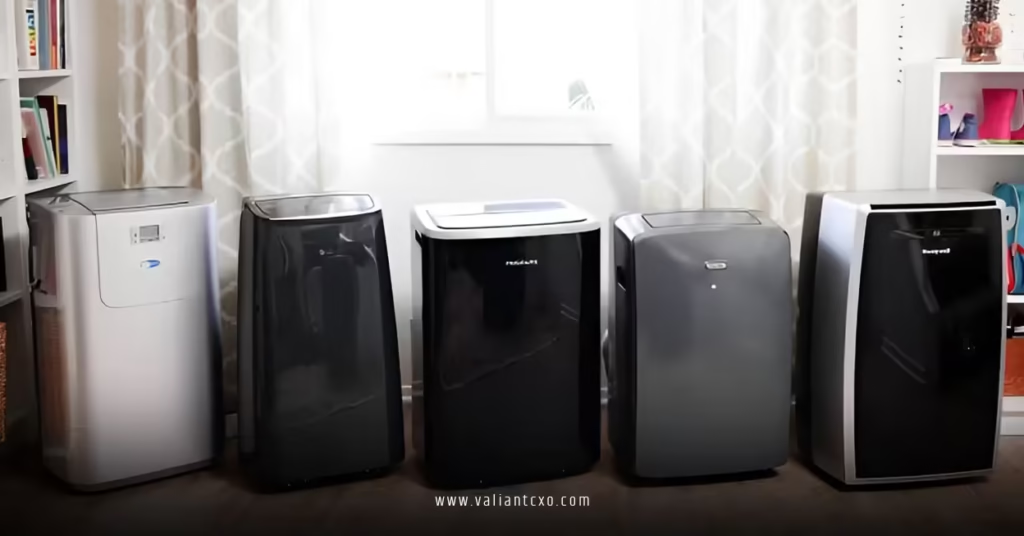
Before you start comparing prices, it helps to understand the common types:
- Single-hose portable ACs
These are the standard units you see in many stores. They sit on the floor and vent hot air out a window using one hose. They are easy to set up but can be less efficient in larger rooms. - Dual-hose portable ACs
These use one hose to bring in outside air and another to expel hot air. They usually cool more effectively and handle heat better in tough climates. - Portable split air conditioners
This is where products like the Midea PortaSplit 12000 BTU portable split air conditioner with heating for renters 2026 come in. You get an indoor component and an outdoor component connected together, which often means quieter indoor operation and better performance than a basic portable system. - Portable ACs with heating
Some units add a heat pump function. These are useful if you live in a place with cold winters or chilly evenings and you want one machine to handle both seasons.
Knowing which type suits your situation will save you from buying something that works well for a week and then feels underpowered.
How to size your portable AC properly
One of the biggest mistakes people make is buying based only on brand or price, not size. Cooling capacity is usually expressed in BTUs (British Thermal Units). As a simple rule, higher BTUs mean the unit can handle a larger space, but bigger is not always better.
You want to match the BTU rating to your room size, ceiling height, insulation quality, and sun exposure. For example, a 12000 BTU portable split unit like the Midea PortaSplit 12000 BTU portable split air conditioner with heating for renters 2026 can be a strong match for many small offices, studios, or apartments, but you still need to check your actual square footage.
To get a sense of recommended BTU ranges and efficiency ideas, the U.S. Department of Energy offers clear guidance on air conditioning on the Department of Energy’s cooling and efficiency page. It is a useful reference when you are not sure how numbers relate to real rooms.
Key features that actually matter for business use
When your portable AC is part of your work environment, some features become more important than others. You should look at:
- Noise level
If you are on calls, run a clinic, or host client meetings, you want a unit that does not roar in the background. Portable split units tend to be quieter indoors than many single-hose units. - Heating function
In the UK or some parts of the USA, the heating mode on a unit like the Midea PortaSplit 12000 BTU portable split air conditioner with heating for renters 2026 can be a real bonus. It saves you from buying a separate heater for winter. - Energy efficiency and running costs
Running your AC all day adds up. Look for models with good ratings and smart modes that reduce energy use. Resources such as the Energy Saving Trust’s guidance on appliances can help you think about efficiency in simple terms. - Controls and smart features
Remote controls, basic app support, and timers can all help you manage comfort while avoiding waste. You do not need every gadget, but ease of use matters. - Drainage and maintenance
Some units need manual water draining; others use self-evaporation. Think about how hands-on you want to be and how often you can realistically service the unit.
Installation and landlord-friendly setup
Even if a unit is “portable,” it still needs a sensible place and window or wall opening for venting. As a renter or business owner, you need to make sure that:
- The window kit works with your window style
- You are not drilling anything that breaks your lease
- Cables and hoses do not block walkways or create hazards
- You can access the unit easily for cleaning and filter changes
Portable split systems, like the Midea PortaSplit 12000 BTU portable split air conditioner with heating for renters 2026, usually involve an outdoor component that must sit safely and securely. That is a big win on performance, but it means you should double-check your building rules before you commit.
If you are operating in Singapore and dealing with intense heat and humidity, the National Environment Agency’s air and climate information is a helpful reference when thinking about practical usage in dense urban housing.
Matching the unit to how your business actually works
We all love specs and features, but your best guide is how your space is used day-to-day. Ask yourself:
- How many hours per day will the AC run?
- Are people on video calls or recording content where noise is a problem?
- Do customers spend long periods in the space, or is it mostly staff?
- Is the room exposed to strong afternoon sun that raises temperatures?
- Do you expect to move location in the next 12–24 months?
If you anticipate moving, a portable split solution with heating can be a smart investment because you can take it with you. If you are locked into a long lease and running a bigger operation, you may eventually consider a more permanent HVAC setup, but a portable AC is often the quickest way to fix comfort now.
When a portable split AC is worth the extra attention
Portable split units sit between basic floor units and fully installed split AC systems. They typically cost more than standard portable units but offer better comfort and noise control. For many entrepreneurs, that trade-off is well worth it.
If you rent, need year-round heating and cooling, and cannot commit to a full drilled installation, then a product like the Midea PortaSplit 12000 BTU portable split air conditioner with heating for renters 2026 deserves a spot on your shortlist. You get flexible installation, stronger performance than many single-hose units, and a design that fits the reality of rental life.
We hope that you have found this article enlightening in some way, and that you now feel more confident about choosing a portable AC that fits your space and your business. Focus on room size, climate, energy use, and how your team actually works during the day. When you match the right type of unit to your real-world needs, you get a cooler, calmer workspace without fighting your landlord or overspending on systems you do not need.