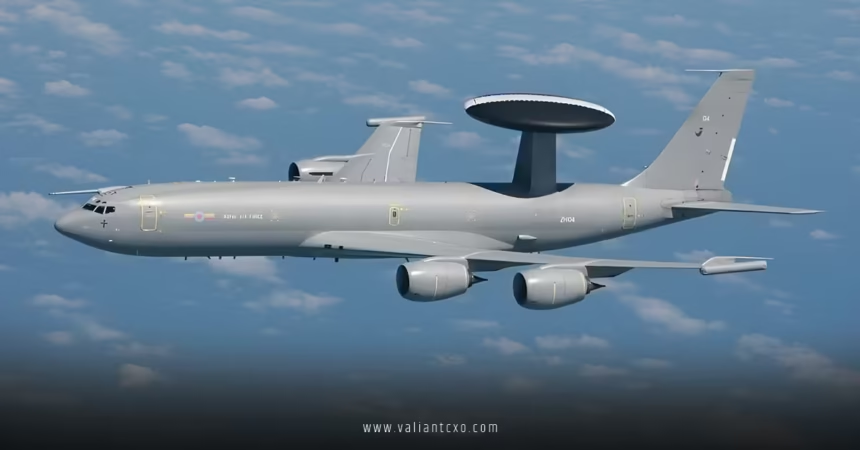
RAF E-3D Sentry retirement reasons boil down to one tough call: the old AWACS fleet had simply grown too expensive and unreliable to keep flying while a newer, sharper replacement waited in the wings. The UK pulled the plug in 2021 after 30 years of service, shifting resources toward the Boeing E-7 Wedgetail.
The decision wasn’t made lightly. By the early 2020s, the Sentry’s Boeing 707 airframe showed its age. Maintenance costs climbed. Parts became scarce. The fleet had already shrunk from seven aircraft to just a handful through attrition and earlier withdrawals. Officials saw a chance to save money and leap forward in capability.
Here’s the quick rundown:
- Aging airframe — Based on the 1950s-era Boeing 707 design, the E-3D needed constant upkeep.
- Rising costs — Sustainment grew painful; a planned life-extension program was scrapped to fund the new platform.
- Fleet reduction — From seven to three operational aircraft by late 2020, limiting coverage.
- Modern replacement — The E-7 Wedgetail promised better radar, efficiency, and data sharing.
- Strategic choice — Accelerate retirement in the 2021 Integrated Review to free up budget.
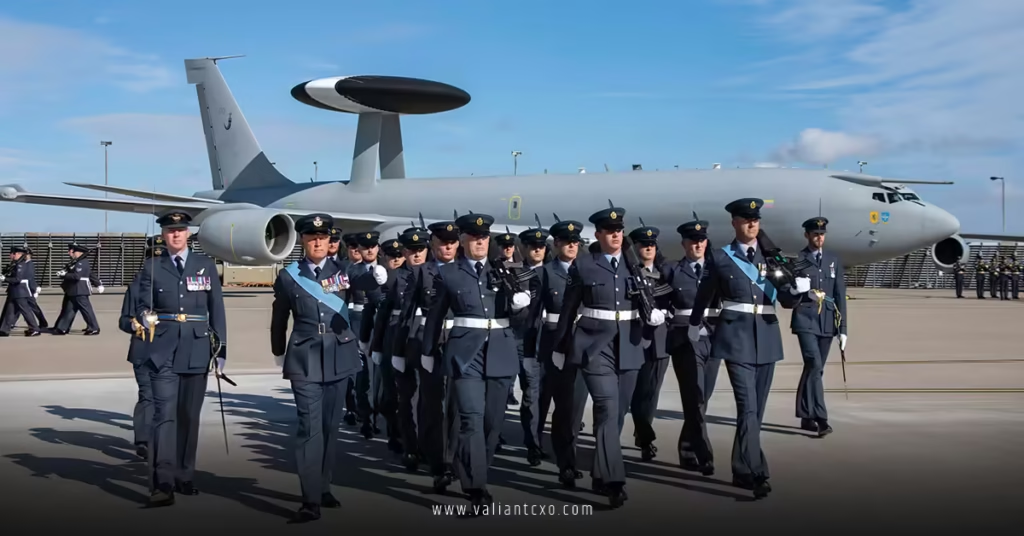
The last operational mission wrapped up in July 2021 on Operation Shader over Iraq. The aircraft returned to RAF Waddington, and the formal retirement ceremony followed in September 2021. No spinning radar dish would patrol UK skies under the RAF flag again until the new Wedgetail arrived.
Why the RAF retired the E-3D Sentry early
The core driver? Money and modernity.
In the early 2000s, the UK chose not to invest heavily in upgrading its E-3Ds to match newer USAF Block 40/45 standards. Funds went elsewhere. By 2019, the Ministry of Defence signed a deal for five E-7 Wedgetails. The plan called for retiring the Sentry around its original out-of-service date of 2022.
Then the 2021 Integrated Review hit. Defence chiefs accelerated the retirement to 2021. They redirected cash from a £2 billion life-extension effort straight into the E-7 program. The fleet size for the new aircraft dropped from five to three to control costs.
Here’s the thing: keeping the old birds alive longer would have eaten budget needed for the leap to next-generation tech. The E-3D, while proven, was two generations behind in key areas like electronic scanning and integration.
The aircraft had seen real action — Balkans, Afghanistan, Iraq, counter-Daesh missions. But mechanical gremlins kept appearing. Fire risks, wiring issues, and cabin conditioning problems grounded planes more often than anyone liked. One 2016 incident saw the entire fleet pulled for safety checks.
Short sentence. Real impact.
By retirement, only three E-3Ds remained flyable. That small number made continuous operations tough, especially with NATO commitments.
Technical and operational headaches that sealed the deal
The E-3D Sentry relied on a classic rotating rotodome radar. Solid for its day, but mechanically complex and increasingly hard to support. The airframe’s age meant higher fuel burn and more downtime.
Sustainment became a headache. Parts obsolescence hit hard. Maintenance hours stacked up. In my experience watching these programs, when an airframe hits 30+ years without major investment, availability drops fast. The RAF felt that pain.
A 2012 wing spar issue and repeated electrical/cabin faults showed the platform’s limits. Rather than pour more money into patching an old design, planners bet on the E-7’s fixed MESA radar — electronically scanned, no moving parts, better at tracking multiple threats while resisting jamming.
The move also aligned with broader RAF shifts. Squadron 8 would relocate from Waddington to Lossiemouth alongside P-8 Poseidon maritime patrol aircraft. New facilities and a fresh start.
But here’s the kicker: retiring before the replacement stood ready created a capability gap. NATO allies and other UK ISTAR assets helped bridge it, yet sovereign airborne early warning took a hit.
Comparison: E-3D Sentry vs. Incoming E-7 Wedgetail
| Feature | E-3D Sentry (Retired 2021) | E-7 Wedgetail AEW Mk1 |
|---|---|---|
| Airframe | Boeing 707 (aging, high fuel/maintenance) | Boeing 737 NG (modern, efficient) |
| Radar | Rotating rotodome | Fixed MESA electronic array |
| Fleet Size at End | Reduced to ~3 operational | Planned 3 (from original 5) |
| Technology Level | 1970s-80s baseline | 21st-century multi-domain tracking |
| Crew & Automation | Larger crew, more manual | Smaller crew, higher automation |
| Primary Drawback | Rising sustainment costs | Delivery delays (now 2026) |
| Operational Role | Proven battle management | Enhanced air/maritime surveillance + C2 |
The E-7 brings clear upgrades. Yet the smaller fleet and timeline slips mean the transition carried risk.
How the retirement tied into the bigger picture
The 2021 Integrated Review aimed to reshape UK defence for new threats — cyber, space, peer competitors. Leaders accepted short-term pain for long-term gain. They described the Sentry as “two generations behind” and positioned the E-7 as a “significant stride forward.”
Critics pushed back. Parliamentary voices called the gap risky. Relying on NATO E-3s and ground systems works in peacetime but leaves vulnerabilities in high-intensity conflict. Low-flying threats or vast ocean areas become harder to monitor without your own eyes in the sky.
The retirement also freed up Waddington for other investments, including Protector drones. Squadrons moved north. People and skills transitioned.
Link to the ongoing story: This early exit directly fed into the Royal Air Force E-7 Wedgetail capability gap 2026. With the Sentry gone in 2021 and the first E-7 not due until around March 2026, the UK navigated several years without dedicated national AEW&C. Delays on the new program stretched that hole further than planned.
Common mistakes in handling platform retirements
Defence watchers often trip over the same pitfalls:
- Underestimating sustainment costs — Old airframes look cheap until parts and labor explode.
- Optimistic timelines — Assuming the replacement arrives exactly on schedule. Delays happen.
- Cutting too deep on numbers — Shrinking from five to three E-7s saved cash but limited surge capacity.
- Ignoring training pipelines — Crews need time to shift platforms without losing institutional knowledge.
Fix? Build realistic buffers. Weigh operational risk alongside budget. Start transition training early. Treat capability gaps as strategic warnings, not just accounting lines.
Step-by-step guide to understanding (or tracking) similar retirements
Want to follow these decisions like a pro? Try this:
- Read the official review — Check the Integrated Review or Defence Command Paper for the “why” behind cuts.
- Track fleet numbers — Watch how many aircraft remain serviceable each year.
- Monitor maintenance reports — Rising downtime or grounding incidents signal trouble.
- Follow replacement contracts — Note award dates, planned vs. actual delivery.
- Listen to Parliament — Hansard records and select committee comments cut through spin.
- Compare capabilities — Ask: What does the old platform do well? What gaps does the new one close?
- Assess the gap — How long will coverage rely on allies? What workarounds exist?
Rule of thumb: If maintenance costs exceed 60-70% of a new platform’s early support, retirement talk usually heats up fast.
What I’d do? Keep a simple timeline spreadsheet — retirement date, replacement milestones, public statements versus reality. Update every six months. It reveals patterns quickly.
Key Takeaways
- The RAF retired the E-3D Sentry in 2021 primarily to cut rising maintenance costs on an aging 707-based fleet.
- Limited investment in upgrades during the 2000s left the aircraft behind modern standards.
- The 2021 Integrated Review accelerated retirement and reduced the E-7 buy from five to three aircraft.
- Last operational flight occurred in July 2021; formal retirement followed in September.
- Mechanical issues like fire risks, wiring faults, and parts obsolescence added pressure.
- The move freed budget for the more capable E-7 Wedgetail with its advanced fixed radar.
- It created a multi-year airborne early warning gap filled partly by NATO partners.
- Skills from 8 Squadron transferred to the new platform at RAF Lossiemouth.
The retirement marked the end of an era for a workhorse that served UK and NATO operations reliably for three decades. It also highlighted the risks of capability holidays in complex procurement.
Next step: Cross-reference official MoD updates with parliamentary scrutiny to stay ahead of similar transitions. Defence budgets always involve trade-offs — understanding the reasons helps separate strategy from shortcuts.
The real lesson? Old platforms don’t fail overnight. They erode quietly until the bill gets too high.
FAQ
What were the main RAF E-3D Sentry retirement reasons?
Aging airframe, escalating maintenance costs, parts obsolescence, and the need to fund the newer E-7 Wedgetail. The 2021 Integrated Review accelerated the timeline to free up resources.
When did the RAF retire the E-3D Sentry?
The last operational mission flew in July 2021. The fleet was formally retired in September 2021 after a ceremony at RAF Waddington.
Did the E-3D Sentry have mechanical problems before retirement?
Yes. Issues included fire risks, electrical wiring faults, cabin conditioning problems, and a 2012 wing spar concern that grounded the fleet temporarily. These added to sustainment headaches.
How did the E-3D retirement connect to the E-7 Wedgetail?
The Sentry was retired early to redirect funds from a life-extension program into the E-7 purchase. This created the Royal Air Force E-7 Wedgetail capability gap 2026, as the new aircraft faced its own delays.
Why was the E-7 fleet reduced from five to three aircraft?
Cost control in the 2021 defence review. While it lowered upfront spending, critics noted it reduced flexibility for continuous operations and maintenance cover.
Will the UK face similar retirement challenges with other platforms?
Possibly. Any aging fleet with rising costs and delayed replacements risks gaps. Tracking sustainment metrics early helps avoid surprises.