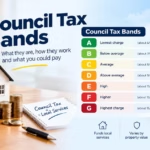
Scrap council tax and stamp duty proportional property tax UK 2026 — that phrase has gone from obscure think-tank jargon to dinner-table argument in about eighteen months. And honestly? It’s overdue. England’s property tax system is held together with duct tape and a 1991 valuation list nobody’s bothered to update.
Here’s the quick version before we go deep:
- The idea: Replace council tax bands and stamp duty land tax with one flat annual charge based on your home’s current value.
- The rate on the table: A 0.48% levy, championed by the Fairer Share campaign and publicly backed by Prime Minister Andy Burnham.
- Who pays: Owners, not tenants — a real shift from today’s setup.
- Current status: Still a proposal, not law. No government has legislated it as of late 2026.
- Why it matters: It could save roughly three in four households money, while hitting high-value homes — mostly in London and the South East — much harder.
Let’s unpack it properly.
What Is the Proportional Property Tax, Exactly?
Think of council tax like a speed limit sign that’s never been updated since the Berlin Wall fell. That’s not hyperbole — the bands genuinely still reflect 1991 property values. A modest terraced house can end up paying a bigger share of its value than a mansion three streets over. It’s backwards, and most economists know it.
Stamp duty has its own problem. You pay it as a lump sum the moment you buy. That punishes people for moving — downsizing pensioners, growing families, anyone trying to relocate for work. The Institute for Fiscal Studies has been blunt about it, calling the tax “awful” for exactly that reason.
The proportional property tax (PPT) tries to fix both headaches at once. Scrap council tax, scrap stamp duty on main homes, and replace them with a single annual charge tied to what your house is actually worth today.
How the 0.48% Model Would Actually Work
The version getting the most airtime right now comes from Fairer Share, and it’s the one Burnham has endorsed. Here’s the mechanics, stripped of spin:
- A flat 0.48% of current property value, charged yearly, on main homes.
- A steeper 0.96% rate for second homes, empty properties, and homes owned by non-residents.
- Stamp duty disappears for ordinary home purchases but sticks around for second-home and overseas buyers.
- The bill lands on the owner, not the renter — so tenants stop getting a council tax demand altogether.
- A transitional cap of £1,200 a year on any increase for existing owners, which lifts once the property changes hands.
- A deferral option for asset-rich, cash-poor owners — think pensioners sitting on a valuable house with a thin pension.
What usually gets lost in the headlines is that rule of thumb I’d give any client asking about this: the lower your home’s value relative to your current council tax band, the more likely you come out ahead. Flip that, and you’re probably paying more.
Scrap Council Tax and Stamp Duty: Who Wins, Who Loses
Fairer Share’s own modelling claims around 77% of households would pay less under the plan, with savings skewed toward the North, the Midlands, and Wales — regions where house prices never caught up with London’s.
That’s the appealing pitch. The catch? The losers aren’t spread thin. They’re concentrated, and they vote.
| Factor | Current System (Council Tax + Stamp Duty) | Proportional Property Tax (0.48%) |
|---|---|---|
| Basis of charge | 1991 valuation bands (A–H) | Current market value |
| Who pays | Occupier (tenant or owner) | Owner only |
| Stamp duty on main home | Lump sum at purchase | Abolished |
| Impact on movers/downsizers | Discouraged by upfront cost | No purchase penalty |
| Typical London impact | Lower relative burden | Sharp increase (Centre for London estimates ~£7.5bn added cost) |
| Typical lower-value-region impact | Higher relative burden | Likely reduction |
| Status (late 2026) | Law, in force | Proposal only — not enacted |
A typical £600,000 London home, by one estimate, could pay roughly £812 more a year than its current Band D bill. Meanwhile a similarly sized home in a cheaper region could see a real cut. That’s the trade-off in one sentence: value-based fairness for the country as a whole, pain concentrated in the capital.
Where Things Actually Stand in Late 2026
Let’s be straight about this, because a lot of blog chatter overstates how close this is to becoming real policy. Burnham backed the Fairer Share plan as Mayor of Greater Manchester. Now he’s Prime Minister, having taken office in July 2026 — but backing an idea from the sidelines and legislating it from Number 10 are two very different things.
Asked directly in July whether stamp duty would change at the coming Budget, he ruled it out. Council tax reform, though, remains a live conversation.
What did actually happen at the Autumn Budget 2025, under then-Chancellor Rachel Reeves, was narrower: a High Value Council Tax Surcharge set to begin in April 2028, applying to properties valued above roughly £2 million, at a flat rate reportedly around £2,500 a year. That’s a targeted mansion tax, not a full system overhaul — a toe in the water, not the dive Fairer Share is pushing for.
There’s also a live Westminster Hall debate pushing for a formal independent review of council tax and Stamp Duty Land Tax, which tells you this isn’t going away as a political question anytime soon.
Step-by-Step: How to Figure Out Your Own Exposure
If you’re a homeowner trying to work out whether scrapping council tax and stamp duty for a proportional property tax would help or hurt you, here’s the practical approach I’d walk a client through.
- Pull your current council tax band and annual bill. You’ll need this as your baseline comparison.
- Get a realistic current valuation of your home. Not what you paid — what it’s worth today. A quick estate agent appraisal or a reputable online valuation tool works fine for a ballpark figure.
- Apply the 0.48% rate to that current value. That’s your hypothetical annual PPT bill under the main proposal.
- Compare the two numbers. If the PPT figure is lower than your current bill, you’re likely a winner under this model. Higher, and you’re in the group that would feel it.
- Factor in stamp duty you’d avoid on a future purchase. If you’re planning to move, the absence of a lump-sum stamp duty bill could matter more than the annual difference.
- Check regional data. London and South East owners should expect to be on the losing side more often than not; that’s simply where values sit.
- Watch the transitional cap. If you’d be a loser, remember any increase is proposed to be capped at £1,200 a year initially — it wouldn’t hit all at once.
- Revisit this annually. None of it is law yet. Treat any number you calculate as a planning exercise, not a certainty.
Common Mistakes & How to Fix Them
Mistake 1: Assuming this is already government policy. It isn’t. It’s a proposal with prominent backing, not legislation. Fix: track official Budget announcements and Treasury statements rather than campaign materials alone.
Mistake 2: Confusing the PPT with a land value tax. Burnham has spoken favourably about both, and they get mixed up constantly. A land value tax charges only the ground beneath your home; the PPT charges the whole property’s value. Different animal entirely.
Mistake 3: Ignoring the second-home and non-resident rate. Landlords especially tend to focus on the 0.48% headline rate and miss that rented and empty properties would sit at double that — 0.96%. Property firm Savills has flagged this as a real risk of landlords selling up rather than absorbing the cost.
Mistake 4: Treating the £1,200 cap as permanent. It’s transitional. The cap lifts the moment the property is sold, so a buyer stepping into a high-value home wouldn’t inherit that protection.
Mistake 5: Forgetting revaluation has to happen first. You can’t tax current value without knowing current value. Every home in England would need reassessing — an administrative job nobody’s underestimating, and one reason reform keeps stalling.
Key Takeaways
- Scrap council tax and stamp duty proportional property tax UK 2026 refers to replacing both taxes with one flat annual charge on current home value.
- The leading proposal, from Fairer Share, sets that rate at 0.48% for main homes and 0.96% for second/empty/non-resident homes.
- Owners pay, not tenants — a structural change from today’s occupier-based council tax.
- Roughly 77% of households could pay less, according to Fairer Share’s modelling, with savings weighted toward regions outside London and the South East.
- It is not law. PM Andy Burnham has ruled out scrapping stamp duty at the next Budget, even while backing the broader idea in principle.
- The actual Budget 2025 measure was narrower: a High Value Council Tax Surcharge on homes over roughly £2 million, starting April 2028.
- Revaluing every home in England is the biggest practical hurdle standing between proposal and policy.
- A £1,200 annual cap on increases is proposed for existing owners during any transition period.
So where does that leave you? Somewhere between curious and cautious, probably — which is the right place to be. This is a genuinely sensible fix for a genuinely broken system, but good ideas in UK tax policy have a habit of sitting on shelves for a decade before anyone touches them. My advice: run your own numbers using the steps above, keep half an eye on the Autumn Budget each year, and don’t restructure your finances around a policy that hasn’t been legislated. Treat it as a planning scenario, not a certainty — and check back after each fiscal statement, because this one’s moving faster than most.
FAQs
Would the proportional property tax under the scrap council tax and stamp duty plan apply to Scotland and Wales too?
No. The proposal as currently framed applies to England only. Scotland and Wales run their own council tax systems and would need separate legislation to adopt anything similar.
If I’m renting, does the scrap council tax and stamp duty proportional property tax UK 2026 proposal affect me directly?
Not directly in terms of a bill — the charge would fall on your landlord as the owner, not on you as the tenant. Indirectly, some landlords might pass costs through via rent, particularly given the higher 0.96% rate proposed for rented properties.
When might scrapping council tax and stamp duty for a proportional property tax actually become law?
There’s no confirmed timeline. As of late 2026, it remains a backed proposal rather than enacted policy, with the only legislated change being the narrower High Value Council Tax Surcharge due in April 2028.