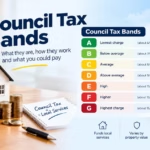
who gets the £100 energy payment 2027 is one of the clearest questions UK households are asking right now. The short answer: households in England living in a council tax band A, B, C or D property as their sole or main residence on 4 January 2027 should receive a one-off £100 payment to help with energy costs.
- Up to 20 million households (roughly 80% of English homes) qualify under the core scheme.
- It is not means-tested. Income, savings, benefits status and energy supplier do not matter.
- Payments start from 4 January 2027 and are delivered by local councils.
- Direct-debit payers get it automatically; others will be contacted to provide bank details or receive it as council-tax credit.
- A separate £100 million Discretionary Fund exists for households that miss out but still need help.
This is not another complicated benefits application. It is a straightforward, property-based payment announced in the Autumn Budget 2026 and confirmed in official guidance published in November 2026.
Who exactly gets the £100 energy payment 2027?
Eligibility rests on three simple tests:
- The property is in England.
- It is in council tax band A, B, C or D.
- You live there as your sole or main residence on 4 January 2027 and are (or would normally be) liable for council tax on it.
Second homes, empty properties and cases where someone else (for example a landlord in certain HMOs) is liable for the council tax fall outside the main scheme. Most households that currently receive a full council-tax exemption or 100% Local Council Tax Support still qualify if the property itself is in bands A–D. That includes many student-only households, properties occupied solely by people with severe mental impairment, under-18s, or dependent relatives in annexes, plus homes that received a Disabled Band Reduction that brought them into A–D.
Military personnel in exempt Ministry of Defence accommodation receive equivalent support through a separate MOD arrangement.
Scotland, Wales and Northern Ireland received Barnett funding. Both the Scottish and Welsh governments have confirmed they will run equivalent or similar schemes. Northern Ireland will decide its own approach.
How the payment reaches you
Councils begin payments from 4 January 2027. The scheme stays open until the end of May.
- If you pay council tax by direct debit and the council already holds verified details, the £100 lands automatically in that bank account. The reference will be “GOV ENERGY PAYMENT”.
- If you do not pay by direct debit, your council will write to you (letters expected in December for many) with instructions on how to supply bank details. Fail to respond by 1 March 2027 and the money can still be applied as a credit to your council-tax account.
- Only one payment is made per eligible household, even if several people are jointly liable.
In my experience watching these council-tax-linked schemes, the biggest friction point is always the non-direct-debit group. Keep an eye on your post and any emails from your local authority. Ignore any message that does not come from your council asking for bank details to “unlock” the payment. Scams will appear.
You can check your current band at any time on the official GOV.UK council-tax band service.
Who gets the £100 energy payment 2027 if you are in a higher band or miss the main rules?
Bands E–H are excluded from the automatic payment. The government has given councils a £100 million Discretionary Fund precisely for households that fall outside the core scheme yet still face acute energy-cost pressure. Larger families, pensioners in bigger homes with high heating needs, and people in HMOs are among the groups councils have been asked to prioritise.
Each council designs its own criteria and must publish details by 12 February 2027. Check your local council’s website once those rules appear.
Step-by-step action plan for beginners
- Confirm your council-tax band on GOV.UK or your latest bill.
- Note whether you currently pay by direct debit.
- Watch for a letter from your council in December or January.
- If asked for bank details, provide them promptly through the official channel only.
- If you are in band E–H or otherwise excluded, mark early February to check your council’s Discretionary Fund rules.
- Separately review whether you qualify for the Warm Home Discount (£150 for eligible low-income households) or Cold Weather Payments.
- While you wait, compare energy tariffs. A better fixed deal can save more than £100 over the year.
Common mistakes and how to fix them
- Assuming the payment is means-tested and not checking your band. Fix: look up the band today.
- Ignoring council letters because you “never claim anything.” Fix: open every letter from your local authority until the end of May.
- Giving bank details to anyone who is not your council. Fix: verify the sender first.
- Thinking tenants never qualify. Fix: if you are the person named as liable for council tax, you usually do.
- Waiting until after the price-cap rise to act on the Discretionary Fund. Fix: note the February publication deadline and act early.
| Situation | Eligible for main £100 payment? | Notes |
|---|---|---|
| Band A–D, main home, pay by direct debit | Yes | Automatic payment |
| Band A–D, main home, other payment method | Yes | Council will contact you |
| Band A–D but fully exempt (students, SMI, under-18s, etc.) | Usually yes | Confirmed in guidance |
| Band E–H | No | Discretionary Fund possible |
| Second home or empty property | No | — |
| Landlord pays the council tax (certain HMOs) | No | Discretionary Fund possible |
| Scotland / Wales / NI | Separate schemes | Funding provided |
Key Takeaways
- The payment is property-based, not income-based.
- Bands A–D in England as your main home on 4 January 2027 is the core rule.
- Direct-debit customers get the money with zero effort.
- Everyone else must respond to their council’s invitation.
- Higher-band or otherwise excluded households should watch for local Discretionary Fund rules.
- The scheme is one-off and timed to the January 2027 price-cap period.
- Always verify any contact about the payment comes from your actual local council.
- Pair the £100 with a tariff check and any other support you may already qualify for.
who gets the £100 energy payment 2027 The £100 will not erase a full winter’s energy bill, but it is real money arriving at the right moment for millions of households. Check your band, watch for the council letter, and treat any unsolicited “claim now” messages with extreme caution. That is the practical next step.
FAQs
Who gets the £100 energy payment 2027 if I have just moved house?
Eligibility is assessed on the property you occupy as your sole or main residence on 4 January 2027. A successful later band challenge that is backdated does not remove the payment if you qualified on the snapshot date.
Does who gets the £100 energy payment 2027 include pensioners automatically?
Pensioners qualify on exactly the same rules as everyone else: band A–D main residence and liability (or the listed exemptions). Age itself is not a factor.
What happens if I never receive contact about who gets the £100 energy payment 2027?
Direct-debit customers should simply wait for the money. Non-direct-debit customers should contact their council after the January letters go out if nothing arrives. The scheme remains open until the end of May.