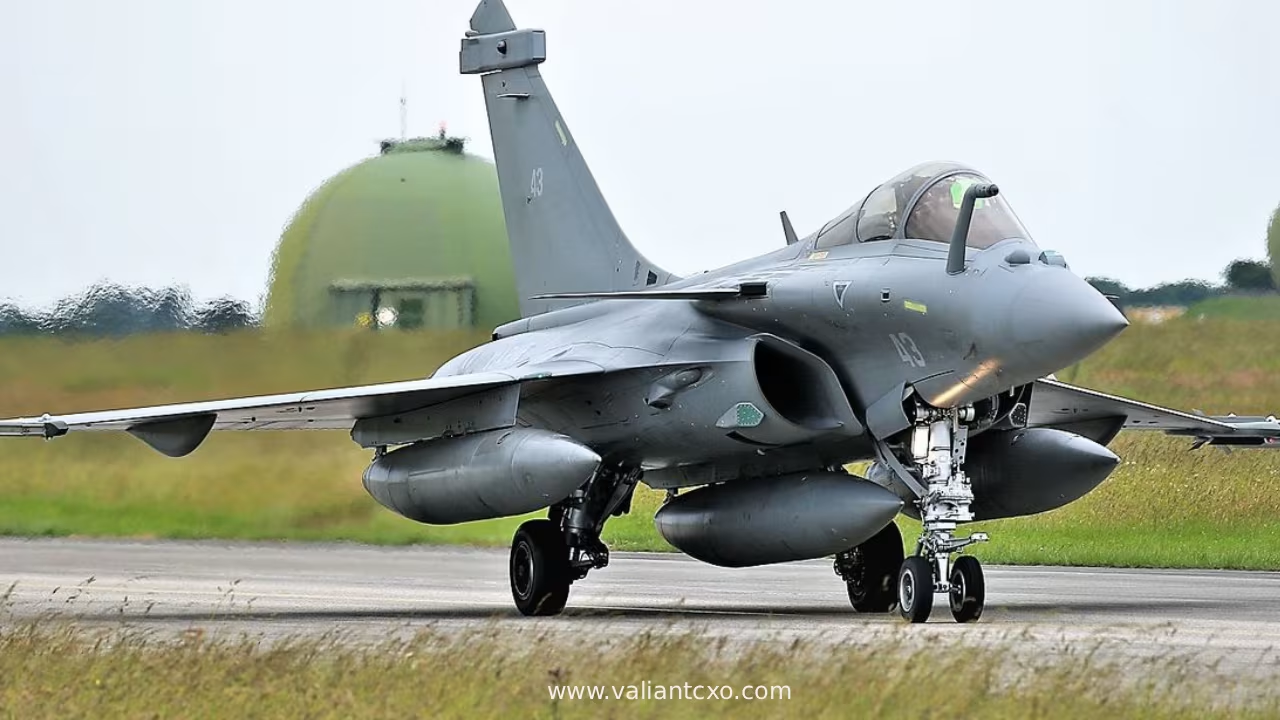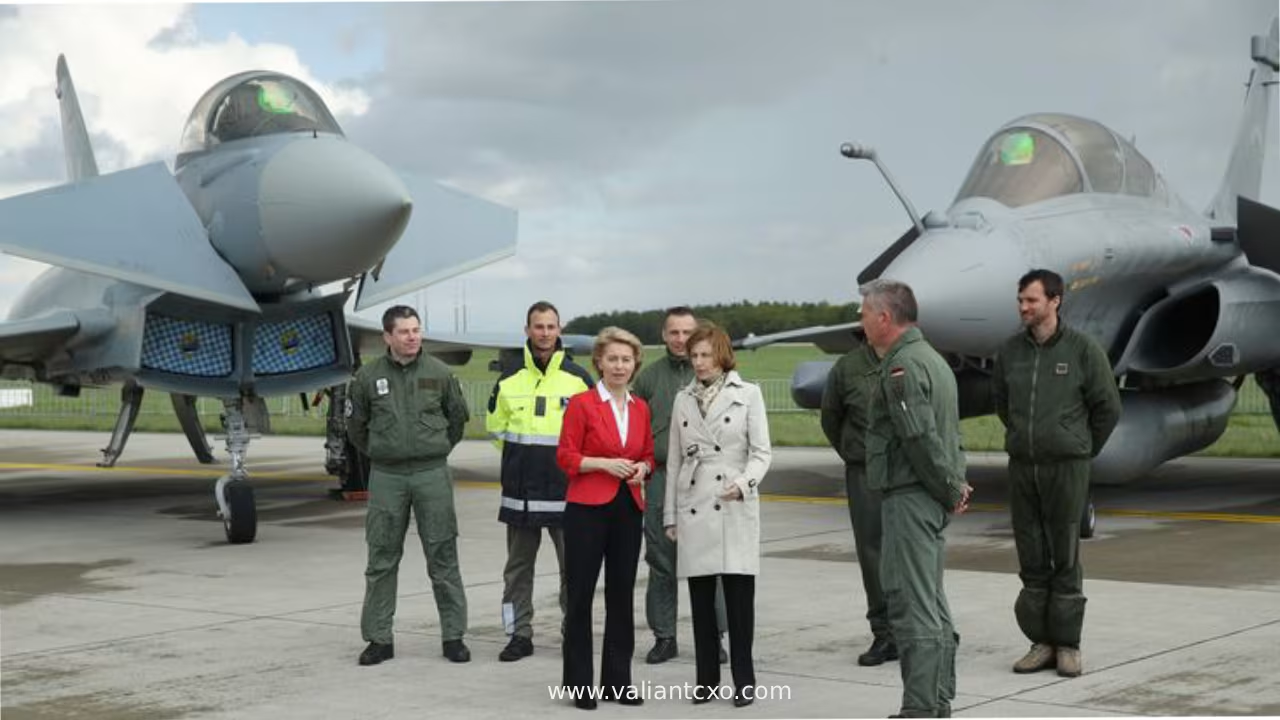
Eurofighter Typhoon vs Rafale comparison is the matchup European air forces and export customers keep revisiting. Two delta-canard fighters born from the same 1980s requirement, then split by politics and design philosophy. One prioritizes pure air superiority. The other was built from day one as a true omnirole machine.
Here’s the short version of what separates them in 2026:
- Typhoon wins on top speed (Mach 2+), climb rate, and thrust-to-weight in clean configurations.
- Rafale carries more external payload (9,500 kg vs roughly 7,500–9,000 kg) and offers a longer practical combat radius on many strike profiles.
- Only the Rafale has a carrier-capable variant and a fully integrated nuclear role with the ASMP-A.
- Typhoon’s EJ200 engines deliver more raw thrust; Rafale’s M88 pair is lighter and optimized for mixed missions.
- Export momentum in the last decade has shifted toward the Rafale, while Typhoon still dominates partner-nation fleets.
Neither jet is a clear “winner.” The better choice depends entirely on the mission set you actually fly.
Side-by-side Eurofighter Typhoon vs Rafale comparison
Eurofighter Typhoon vs Rafale comparison Both aircraft use canard-delta layouts and fly-by-wire systems. Both carry the Meteor beyond-visual-range missile. Both have matured into capable multirole platforms through successive upgrades. The differences show up in the details.
| Specification | Eurofighter Typhoon | Dassault Rafale |
|---|---|---|
| Length | 15.96 m | 15.27–15.30 m |
| Wingspan | 10.95 m | 10.90 m |
| Empty weight | ~11,000–11,150 kg | 9,850–10,600 kg (variant dependent) |
| Max takeoff weight | 23,500 kg | 24,500 kg |
| Engines | 2 × Eurojet EJ200 | 2 × Safran M88-2 |
| Thrust (afterburner, each) | ~90 kN | ~75 kN |
| Max speed | Mach 2.0+ | Mach 1.8 |
| Service ceiling | ~55,000–65,000 ft | ~50,000–52,000 ft |
| Ferry range | ~3,790 km | 3,700 km |
| Typical combat radius | ~1,389 km (hi-lo-hi) | ~1,850 km (penetration) |
| External hardpoints | 13 | 14 (13 on naval M) |
| External payload | ~7,500–9,000 kg | 9,500 kg |
| Carrier capable | No | Yes (Rafale M) |
| Nuclear role | Limited / planned | Fully integrated (ASMP-A) |
These figures come from manufacturer data and consistent open reporting. Actual performance always depends on loadout, altitude, and tactics. For the full breakdown of the French jet’s numbers, see the detailed Dassault Rafale specifications and range.
Air-to-air performance: where the Typhoon usually edges ahead
In a pure beyond-visual-range or high-altitude dogfight, the Typhoon’s higher thrust-to-weight ratio and superior climb rate give it energy advantages. Pilots often describe it as “pointy” — it accelerates hard and holds speed well. The CAPTOR-E AESA radar (on later Tranches) adds a wide field of regard that helps when the jet is turning hard.
Eurofighter Typhoon vs Rafale comparison The Rafale counters with excellent sensor fusion, the SPECTRA electronic-warfare suite, and a very capable RBE2 AESA. Its lower empty weight and careful aerodynamics let it sustain turns longer in some regimes. In exercises, both jets have taken each other by surprise depending on the rules of engagement.
The kicker? Most modern air combat is decided before the merge. Missile performance, data links, and electronic attack matter more than pure kinematics. Both aircraft carry the Meteor, so the difference shrinks in a well-networked fight.
Multirole and strike: Rafale’s home turf
This is where the design philosophies diverge. The Typhoon started life as an air-superiority fighter and later added ground-attack capability. The Rafale was designed from the start to switch roles in the same sortie without landing.
The French jet’s higher external payload and 14 hardpoints let it carry mixed air-to-air and air-to-ground loads more comfortably. SCALP-EG cruise missiles, AASM Hammer guided bombs, Exocet anti-ship missiles, and a full suite of air-to-air weapons can all hang at once. The naval Rafale M adds the ability to operate from the Charles de Gaulle or friendly carriers — something the Typhoon simply cannot do.
Range figures also favor the Rafale on many penetration profiles. That 1,850 km combat radius (with tanks) gives planners more flexibility when tanker support is limited. For a deeper look at how those numbers were derived, the Dassault Rafale specifications and range article walks through the details.
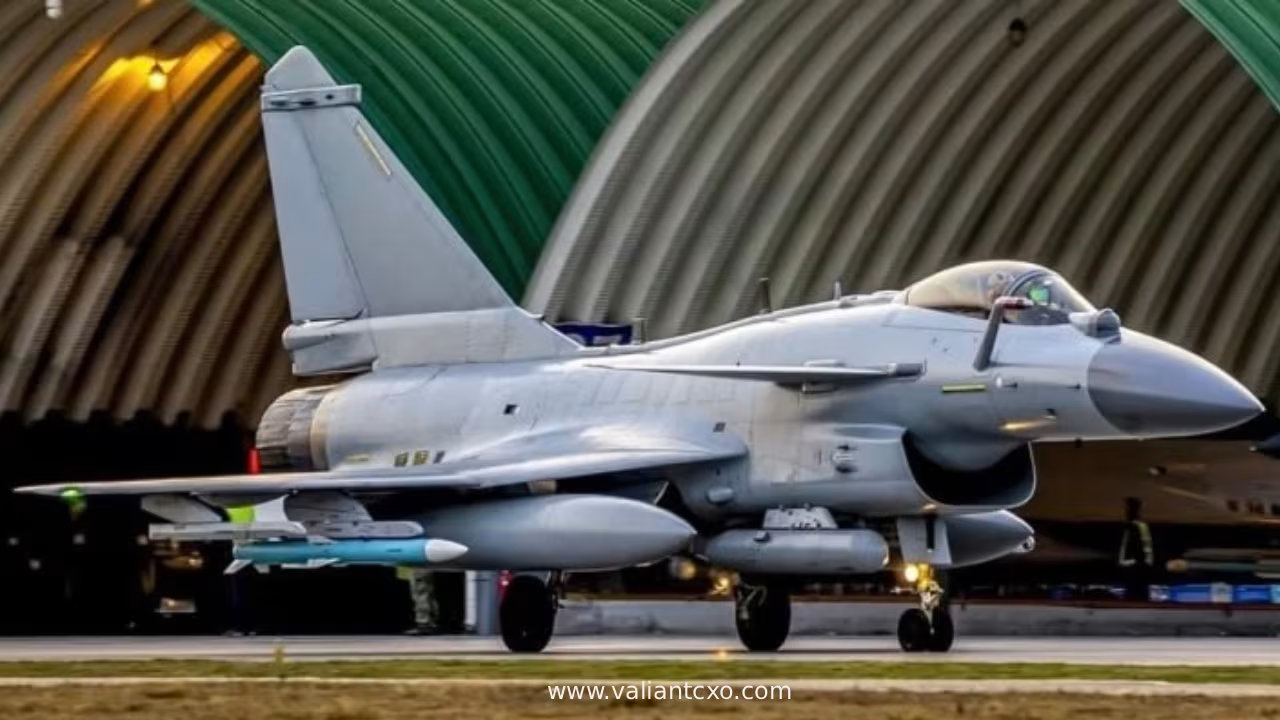
Sensors, electronic warfare, and survivability
Both jets have matured significantly. Later Typhoons field the CAPTOR-E AESA with its unique swashplate that widens the scan volume. The Rafale’s RBE2 AESA and OSF infrared search-and-track system have been combat-proven for years. SPECTRA remains one of the most respected integrated self-protection suites in the West.
In contested airspace, the Rafale’s lower radar cross-section treatments and mature electronic attack capabilities often get the nod from operators who have flown both. The Typhoon relies more on speed, altitude, and network support to survive.
Cost, logistics, and politics
Unit prices fluctuate with configuration and industrial offsets, but recent export deals have generally put the Rafale in a competitive band. Operating costs favor the French jet in many analyses, partly because a single nation controls the supply chain. The Typhoon’s four-nation consortium can slow decisions and complicate technology transfer.
Export results tell part of the story. The Typhoon has strong sales to partner countries and earlier Gulf customers. Since the mid-2010s the Rafale has won the majority of open competitions — Egypt, Qatar, India, Greece, Croatia, UAE, Indonesia, Serbia. Political reliability and willingness to transfer technology matter as much as the brochure numbers.
Step-by-step: how to decide between them
- Define your primary mission. Pure air policing and high-altitude interception? Lean Typhoon. Mixed strike, carrier ops, or independent nuclear deterrence? Lean Rafale.
- Map your theater distances and tanker availability. Longer unrefueled legs favor the Rafale’s published combat radius.
- Assess industrial and political constraints. Single-nation support versus multinational program has real long-term implications.
- Check current standards. Typhoon Tranche 4/5 and Rafale F4/F5 both bring major sensor and connectivity upgrades.
- Run the total ownership cost, not just flyaway price. Include training, spares, and weapons integration.
- Talk to operators who fly both or have evaluated both. Paper specs never capture the full picture.
Common mistakes in the Eurofighter Typhoon vs Rafale comparison
People treat top speed as the decisive factor. It rarely is. Most combat happens well below Mach 1.5.
Another frequent error is comparing early Typhoon Tranches to current Rafale F4 jets (or vice versa). Both platforms have evolved dramatically.
Some analysts ignore the carrier and nuclear roles entirely. Those capabilities are irrelevant to many air forces — and decisive for others.
Finally, treating the competition as a zero-sum game. Several nations operate both types or have considered mixed fleets. They solve different problems.
Key Takeaways
- Typhoon holds clear advantages in speed, climb, and pure air-superiority kinematics.
- Rafale leads in external payload, practical combat radius on strike missions, carrier capability, and integrated nuclear role.
- Both jets are highly capable 4.5-generation platforms with strong upgrade paths into the 2030s and beyond.
- Sensor fusion, electronic warfare, and networking often matter more than raw engine thrust.
- Export trends since 2015 have favored the Rafale; partner-nation production keeps the Typhoon strong.
- Mission requirements, industrial policy, and politics decide more deals than pure performance numbers.
- Neither aircraft is obsolete. Both remain frontline tools in 2026 and will stay relevant for decades.
The Eurofighter Typhoon vs Rafale comparison is less about which jet is “better” and more about which set of compromises fits your air force. One is a high-energy interceptor that learned to strike. The other is a versatile strike fighter that never forgot how to fight for air superiority. Choose the one that matches the wars you actually expect to fight.
If you want the full technical foundation for the French side of this debate, start with the complete Dassault Rafale specifications and range breakdown. Then run the numbers against your own threat environment and basing plan. Paper comparisons are useful. Real operational analysis is better.
FAQs
Which jet has the better combat radius in the Eurofighter Typhoon vs Rafale comparison?
On many penetration and strike profiles the Rafale’s published ~1,850 km figure is higher. The Typhoon’s typical hi-lo-hi radius sits around 1,389 km. Actual results depend heavily on weapons load and flight profile.
Is the Typhoon faster than the Rafale?
Yes. The Typhoon reaches Mach 2.0+ while the Rafale is limited to Mach 1.8. The Typhoon also climbs faster and has a higher service ceiling in most published data.
Why has the Rafale won more recent export contests?
A combination of true omnirole design, carrier capability, competitive pricing with technology transfer, and a single-nation decision chain that can move faster than a four-partner consortium.