
NBA playoff Game 7 breakdowns matter because this is where talent, coaching, execution, and nerves all get exposed at the same time. The margin for error disappears. One bad stretch can end a season.
- Game 7s are usually decided by defense, shot quality, and turnover control.
- Early momentum often tells you who is comfortable and who is pressing.
- Bench production can swing the entire game.
- Coaching adjustments after halftime usually matter more than raw scoring.
- A great example of this is the Cavs blow out Pistons 125-94 Game 7 highlights 2026, which shows how a team can turn pressure into control.
Why NBA playoff Game 7 breakdowns are different
NBA playoff Game 7 breakdowns are not the same as regular game recaps. A Game 7 is a pressure cooker. Players get tighter. Coaches shorten rotations. Every possession feels heavier.
That changes how you evaluate the game.
A normal box score can tell you who scored. A Game 7 breakdown tells you why one team survived and the other one folded. Did the winner get cleaner looks? Did they win the rebounding battle? Did they force the opponent into late-clock possessions? Those are the real questions.
Here’s the thing: in a Game 7, the team that executes simple basketball usually wins. Not the flashiest team. The steadiest one.
What to look for in a Game 7 breakdown
When you study NBA playoff Game 7 breakdowns, focus on a few high-value areas.
Early pace and body language
The first five minutes usually reveal a lot.
Is a team attacking with purpose, or are they hesitating?
Look for:
- crisp ball movement
- early paint touches
- confident shot selection
- defensive communication
- transition energy
If one team looks rushed and the other looks organized, that’s not random. That’s pressure showing up on the floor.
Shot quality, not just shot making
A hot shooting stretch can fool people. The better question is whether the team is generating good looks consistently.
In strong Game 7 performances:
- the ball gets into the paint
- shooters are catching and stepping into rhythm
- offensive sets create advantages
- bad shots are limited
In weak Game 7 performances, teams settle. They take contested jumpers too early. They stop moving the ball. That usually ends badly.
Bench impact
Bench minutes can swing a Game 7 fast.
A solid second unit can:
- keep the lead intact
- stop momentum runs
- buy rest for the stars
- keep defensive energy high
If the bench gives nothing, the starters are forced to carry too much. That’s where legs go dead and mistakes pile up.
Defensive discipline
Most Game 7 winners defend with a plan. They contest without fouling. They rotate on time. They protect the rim and force tough perimeter attempts.
Defense in a Game 7 is not about highlight blocks. It’s about:
- closing out under control
- limiting second chances
- forcing the ball-handler into traffic
- staying attached off the ball
NBA playoff Game 7 breakdowns and what usually decides them
There are patterns you can count on.
Turnovers get punished
Bad passes and careless dribbles are brutal in Game 7s. Every turnover kills a possession and often starts a run in the other direction.
Teams that protect the ball usually:
- control tempo
- get more clean shots
- avoid giving away momentum
Rebounding matters more than usual
In a one-game series finale, a single offensive rebound can change everything. Extra possessions are gold.
Strong rebounding teams often:
- create second-chance points
- slow the opponent’s transition game
- grind down the clock
Stars have to be steady
Game 7s are not always about a massive scoring eruption. Sometimes the best star performance is the calm one.
You want to see:
- smart shot selection
- fewer empty possessions
- willingness to make the extra pass
- enough aggression to keep defenders honest
A star who keeps the offense stable can be more valuable than one who forces everything.
How to build a smarter Game 7 breakdown
If you want to understand NBA playoff Game 7 breakdowns at a higher level, use this simple process.
- Watch the opening quarter first.
See which team sets the tone and how each offense is getting into its actions. - Track momentum swings.
Don’t just note scoring runs. Look at what caused them: turnovers, switches, missed box-outs, or poor shot selection. - Study the coaching adjustments.
Pay attention to lineup changes, defensive coverages, and timeouts after big runs. - Compare starters and bench units.
Ask which group actually controlled the game, not just which stars scored the most. - Finish with the final six minutes.
This is where pressure, shot selection, and composure matter most.
If you do that consistently, your eye for basketball improves fast.
Table: What separates a winning Game 7 from a losing one
| Category | Winning Team | Losing Team |
|---|---|---|
| Shot selection | Patient, balanced, paint-first looks | Forced, early, contested shots |
| Defense | Connected, physical, disciplined | Late rotations, broken coverages |
| Turnovers | Controlled possessions | Loose handling and rushed decisions |
| Bench play | Reliable scoring or defense | Negative or inconsistent minutes |
| Late-game execution | Calm, structured, efficient | Panicked, isolated, predictable |
Common mistakes people make in Game 7 analysis
Mistake 1: Judging only by points
A player can score 25 and still have a shaky Game 7. Why? Because context matters. Shot difficulty, turnovers, and defensive effort all matter too.
Mistake 2: Overreacting to one hot quarter
One explosive quarter does not define the game. You need to see whether the team sustained control or just caught fire for five minutes.
Mistake 3: Ignoring matchup advantages
Sometimes the winning team simply had the better fit. That doesn’t mean every player suddenly “broke out.” It may just mean the opponent had no answer for a specific action.
Mistake 4: Forgetting the role of fatigue
By Game 7, tired legs change everything. Missed free throws, short jumpers, and slow closeouts often come from exhaustion, not just pressure.
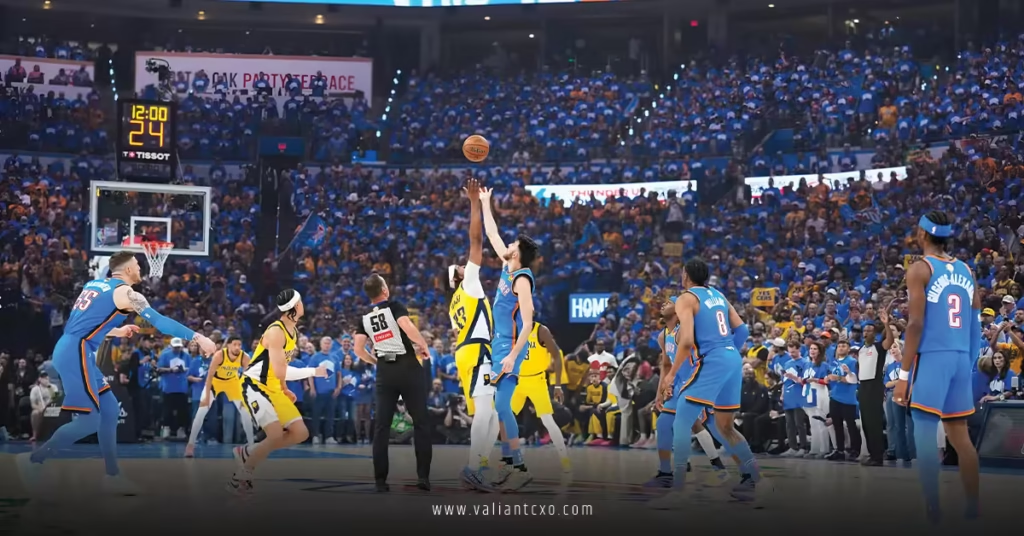
How NBA playoff Game 7 breakdowns help fans, creators, and analysts
If you cover basketball or just love studying it, Game 7 breakdowns are a gold mine.
They help you:
- explain why a team won or lost
- identify repeatable playoff habits
- separate real team quality from one-game noise
- build smarter content around high-pressure matchups
And if you want a concrete example of how a decisive Game 7 can be framed for readers, the Cavs blow out Pistons 125-94 Game 7 highlights 2026 story is a strong reference point for a dominant closeout performance.
Key takeaways
- NBA playoff Game 7 breakdowns are about execution under maximum pressure.
- Defense, turnovers, rebounding, and shot quality usually matter more than raw scoring totals.
- Early game tone often predicts how comfortable a team will be late.
- Bench production can decide whether a team survives pressure runs.
- Coaching adjustments are a huge part of any serious Game 7 analysis.
- The best breakdowns focus on causes, not just outcomes.
- A strong example is the Cavs blow out Pistons 125-94 Game 7 highlights 2026 matchup, which shows what a dominant closeout looks like.
Game 7 basketball is brutal. That’s why it’s so revealing. If you want to understand a team’s real toughness, don’t stop at the final score. Break down the possessions, the pace, the rotations, and the response to pressure.
FAQs
What makes NBA playoff Game 7 breakdowns so valuable?
They show how teams handle pressure when there is no room left for mistakes. That makes them one of the best ways to understand a team’s real strengths and weaknesses.
How can I use NBA playoff Game 7 breakdowns to improve my basketball knowledge?
Watch for shot quality, defensive rotations, turnover patterns, and coaching adjustments. Those details tell you more than the box score alone.
Why is the Cavs blow out Pistons 125-94 Game 7 highlights 2026 example useful in Game 7 analysis?
It gives a clear picture of a team that controlled pace, executed cleanly, and turned a win-or-go-home game into a statement win.